There’s a specific stomach-drop that hits when you find your own work living somewhere it shouldn’t: your photo on a stranger’s storefront, your video reuploaded to a channel farming your views, your article copied word-for-word onto a site that outranks you for your own writing. The instinct is to fire off a furious message immediately. Resist it. That first reaction is almost always the least effective thing you can do, and occasionally it makes the problem worse.
Content theft is common, and creators handle it badly not because they lack options but because they skip straight to the loudest one. This is the calm, ordered version – a playbook that tells you what to do first, what to do next, and how far up the ladder to climb before it stops being worth your time.

Step 1: Freeze the evidence before you tip anyone off
The moment you complain, the infringer can delete, edit, or hide what they did – and then it’s your word against theirs. So before you send a single message, preserve proof.
Track the cases yourself
Every current AI-copyright ruling — and the ones still being fought — lives in our AI Copyright Ruling Tracker. Filter by your creator type to see, in plain language, how each case affects your rights.
- Screenshot everything – the infringing page, the URL bar, and a visible date if you can. Capture the whole context, not just a crop.
- Save the URLs in a plain document, and archive the pages. A tool like the Internet Archive’s Wayback Machine can capture a permanent, timestamped copy that survives later deletion.
- Document that you made it first. Pull up your original files, their creation dates, your published version, your registration if you have one – anything that establishes your timeline over theirs.
Five minutes of quiet documentation now is worth more than any angry paragraph. If this ever escalates, this folder is your case.
Step 2: Diagnose what actually happened
Not every unwelcome reuse is copyright infringement, and using the wrong tool wastes your time. Figure out which situation you’re actually in before you act.
Is it copyright? Copyright protects your original creative expression – photos, videos, music, illustrations, writing, code. If someone copied your actual work, that’s the classic case, and the rest of this playbook applies directly.
Or is it something else?
- Trademark – if they copied your brand name or logo rather than your creative work, that’s a different legal lane with a different process.
- A license you forgot about – did you sell, license, or post this under terms that allowed reuse? Check before you accuse. Firing at someone who paid you is a bad look.
- Fair use – commentary, criticism, parody, news, and genuinely transformative reuse can be legally protected. If someone reviewed or reacted to your work with a portion of it, tread carefully; overreaching here can backfire on you.
- An idea, not your expression – copyright protects how you expressed something, not the underlying concept. Someone covering the same topic or making a similar-style product isn’t automatically infringing.
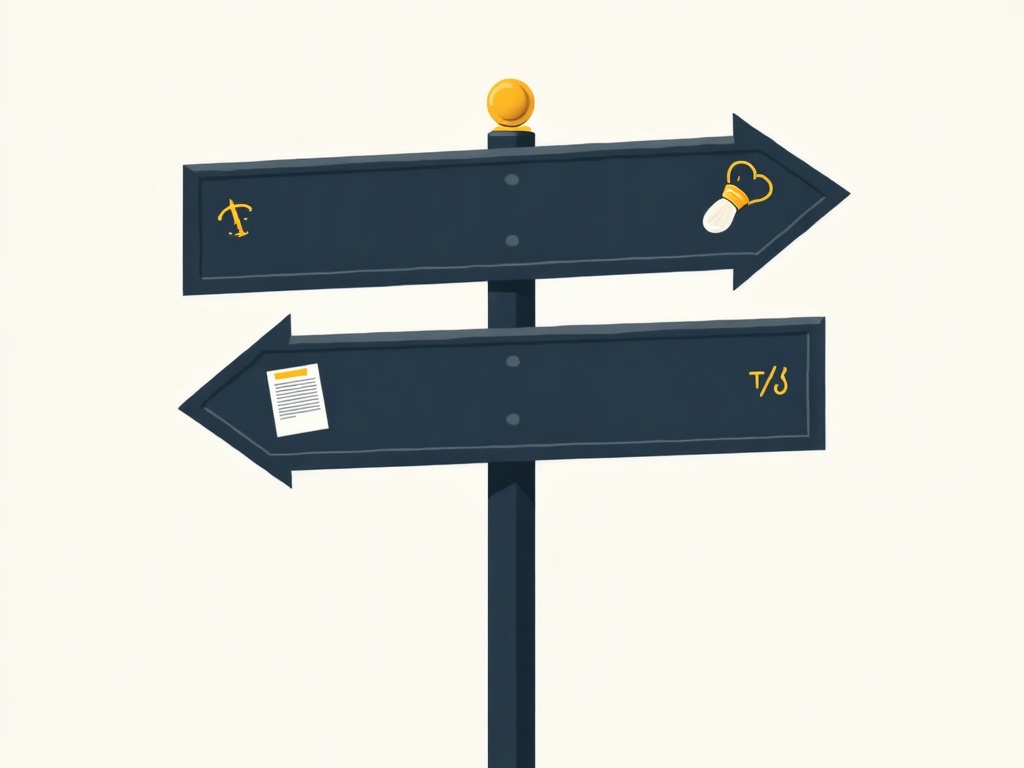
Get this diagnosis right and the correct tool becomes obvious. Get it wrong and you’ll spend weeks pushing on the wrong door.
Step 3: Climb the enforcement ladder one rung at a time
Enforcement isn’t one action – it’s a ladder that runs from cheap and fast at the bottom to slow and expensive at the top. Start low. Most theft is resolved on the first two rungs, and there’s no prize for escalating faster than you need to.
Rung 1 – A direct, polite request. Plenty of “theft” is a clueless fan, a lazy repost, or someone who genuinely didn’t know better. A short, factual message – “This is my work, I didn’t authorize this use, please remove it by [date]” – often works instantly and costs you nothing. Keep it calm and professional; you may need it as evidence later.
Rung 2 – Report to the platform or host. If a direct ask fails or isn’t appropriate, go to the intermediary. Major platforms (YouTube, Instagram, TikTok, Etsy, and others) have dedicated copyright forms, and web hosts must respond to a proper DMCA takedown notice to keep their legal safe harbor under Section 512. This is the workhorse rung, and for most creators it’s where the fight is won. (We cover exactly how to write a valid notice in our DMCA takedown guide.)
Rung 3 – Search-engine de-indexing. If the content stays up but you can at least make it invisible, Google’s copyright removal process can drop infringing pages from search results. It doesn’t delete the page, but it strangles the traffic that made copying you worthwhile.
Rung 4 – Pressure the money and the pipes. When a site itself won’t cooperate – especially an offshore or “bulletproof” host – look at what it depends on: its upstream hosting provider, its CDN, or its payment processor. A store reselling your art can’t sell much if its payment processor drops it for IP violations.
Rung 5 – Formal legal action. A lawyer’s cease-and-desist letter carries weight a personal email doesn’t, and a lawsuit is the top rung. It’s powerful and it’s expensive, so it’s reserved for real, provable harm – which brings us to the money.

Step 4: Know when registration changes the math
Here’s the part that quietly decides how much leverage you actually have. In the U.S., you own copyright the moment you create something – but registering it with the U.S. Copyright Office unlocks the remedies that make lawsuits worth filing.
- Registration is a prerequisite to suing over a U.S. work. No registration, no lawsuit – full stop.
- Timely registration unlocks statutory damages and attorney’s fees. Under 17 U.S.C. 504 and 505, if you registered before the infringement began (or within three months of first publication), you can seek statutory damages of $750 to $30,000 per work – up to $150,000 if the infringement was willful – plus your legal fees. Register too late, and you’re generally limited to proving your actual losses, which for most creators are small and hard to quantify.
That difference is enormous. It’s the reason a registered photographer can make an infringer take a settlement seriously, while an unregistered one often can’t justify the cost of a fight. The practical lesson: register the work you care about early, ideally at publication – it’s cheap insurance that transforms your negotiating position long before any theft happens.
Step 5: Pick your battles
Once your work is out there, some level of copying is inevitable, and you cannot chase every instance without losing your mind and your working hours. Enforcement is triage, not a moral crusade. Before you climb the ladder on any given case, ask:
- How much harm is this actually doing? A tiny fan repost with no commercial impact is not the same as a competitor reselling your work for profit or outranking you in search.
- Can I win cheaply? A cooperative U.S. platform is an easy yes. An anonymous offshore site with no contact info may not be worth the hours.
- Is it spreading or contained? One copy on one site is a quick takedown. Work that’s been reposted across dozens of places is whack-a-mole – prioritize the highest-traffic, highest-harm copies and let the trivial ones go.

Spending a full day to remove a copy that cost you nothing is a bad trade. Spending an hour to stop someone profiting from your work is a great one. Protect your energy as deliberately as you protect your work.
Your next steps
- Document first – screenshots with URLs and dates, an archived copy, and proof you created it. Do this before you contact anyone.
- Diagnose – confirm it’s copyright (your original work copied), not trademark, a license you granted, or protected fair use.
- Start low on the ladder – a polite request, then a platform report or DMCA takedown, escalating only as far as the harm justifies.
- Check your registration – if the work matters, register it (early is best); it’s the key to statutory damages and to suing at all.
- Triage ruthlessly – chase the copies that cause real harm and let the harmless ones go.
Finding your work stolen feels like a violation, and it is one – but panic is not a strategy. Freeze the evidence, name the problem correctly, and climb only as high as the situation demands. Handled this way, most content theft ends quietly on a lower rung, and the energy you save stays where it belongs: on making the work worth stealing in the first place.
This article is general information for creators and small-business owners, not legal advice. Whether a specific use infringes – and which remedy fits – depends on your facts; for a high-value or contested case, a licensed IP attorney is worth the consult.
IPSurge helps creators and small businesses understand and protect their intellectual property – the ideas, names, and work that make them unique.
Sources & further reading:
- U.S. Copyright Office – Registration Portal and Why to Register
- 17 U.S.C. 504 – Remedies for infringement: Damages and profits (Cornell LII)
- 17 U.S.C. 412 – Registration as prerequisite to statutory damages and attorney’s fees (Cornell LII)
- 17 U.S.C. 512 – Limitations on liability (DMCA safe harbor) (Cornell LII)
- Google – Remove content from Google (copyright legal removal)
- Lumen Database – takedown transparency archive