Here’s the comforting story most people tell themselves: “I bought it from a stock site, so I’m covered.” You downloaded the image, maybe even paid for it, and you assume the paperwork is somebody else’s problem now. Then one day a demand letter shows up — often from a law firm or a “copyright enforcement” company — claiming you owe thousands for an image you were sure you licensed.
It happens more than you’d expect, and the maddening part is that the people on the receiving end usually did pay for something. The trouble is that a stock license is a narrow permission with limits baked into it, and those limits are exactly where creators and small businesses get caught. Let’s walk through the traps — in plain language — so you can keep using stock content without the nasty surprise.
A License Is Permission With Strings — Not a Blank Check
Start with the core idea: when you “buy” a stock photo, song, or video, you’re almost never buying the copyright. You’re buying a license — permission to use that file in certain ways, under certain conditions. The agency (Getty, Shutterstock, Adobe Stock, iStock, and the rest) keeps the copyright, and the contributor who made the file keeps their share of the rights behind it.
Track the cases yourself
Every current AI-copyright ruling — and the ones still being fought — lives in our AI Copyright Ruling Tracker. Filter by your creator type to see, in plain language, how each case affects your rights.
That means the license agreement — the long page of terms you clicked past — is the actual rulebook. Use the image inside those rules and you’re fine. Step outside them, even innocently, and you’ve committed copyright infringement just as surely as if you’d never paid at all. The receipt proves you had a license; it doesn’t prove you stayed inside it. Nearly every trap below is really the same mistake: treating a limited license like unlimited ownership. If the whole idea of renting rights versus owning them is fuzzy, it’s worth understanding how licensing and usage rights actually work before you build a brand on borrowed images.
Trap #1: Editorial-Only Images Used for Commercial Work
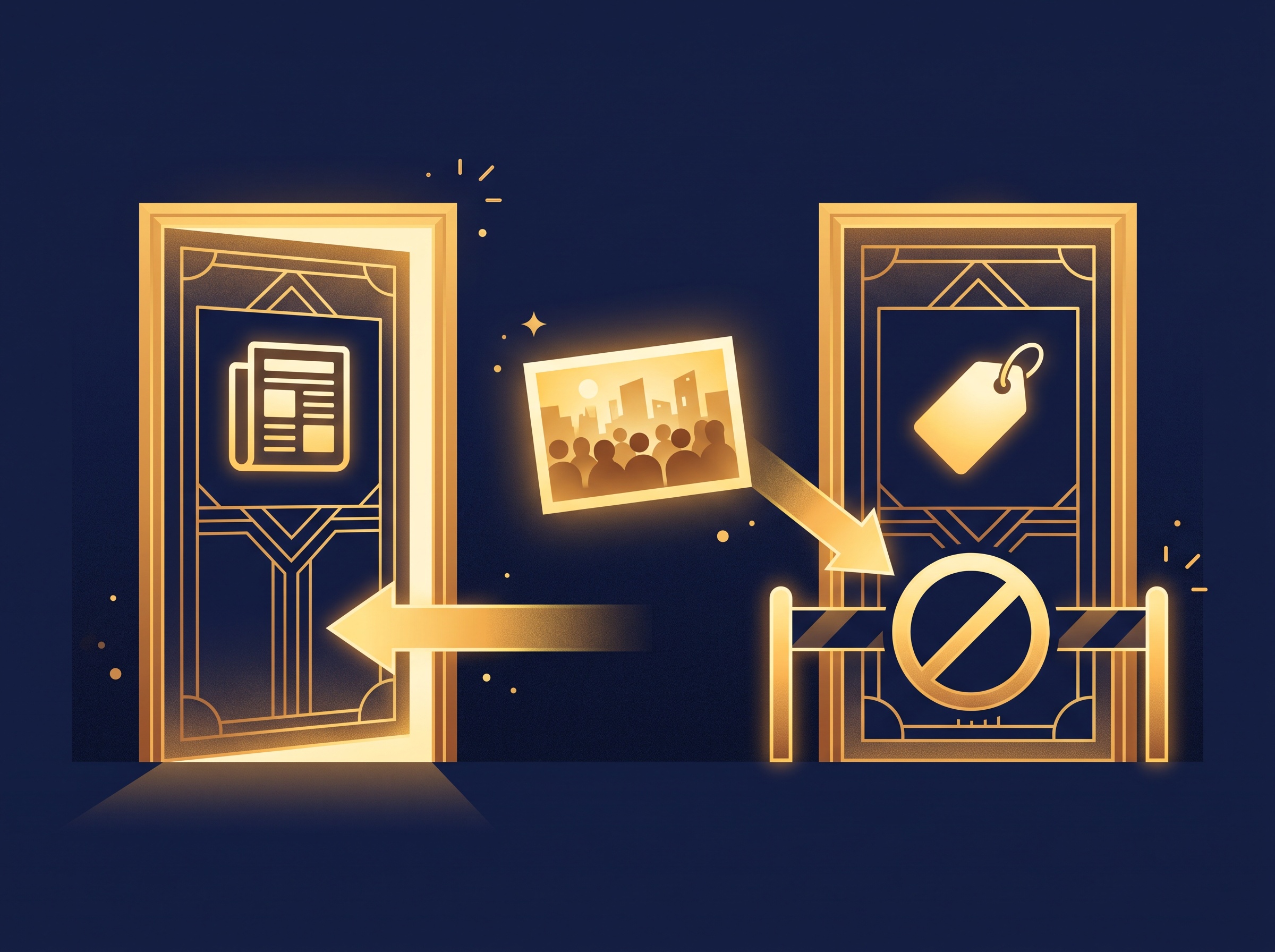
This is the single most common way “licensed” images blow up. Many stock files — especially photos of real people, celebrities, events, branded products, or recognizable places — are marked “editorial use only.” That label is not decoration. It means the image may be used to illustrate news, commentary, or education, but not to sell, promote, or endorse anything.
Drop an editorial-only photo into an ad, a product page, a packaging design, a sponsored post, or even a logo, and you’ve broken the license — because the image was never cleared for commercial use. The fix is simple once you know to look: check whether a file is licensed for commercial or editorial use before you place it anywhere that sells or markets something. When in doubt, assume a photo of an identifiable person or brand is editorial-only until the license says otherwise.
Trap #2: The License Expired, Changed, or Got Pulled
A license isn’t always forever. Several timing traps catch people who did everything right at first:
- Time or print-run limits. Some licenses — particularly rights-managed ones — cover a specific use for a specific period, region, or print quantity. Keep running the image after the term ends, or far beyond the agreed print run, and you’re now unlicensed. (The distinction between open-ended royalty-free and tightly-scoped rights-managed licenses is exactly where this bites.)
- Content that gets removed. Agencies sometimes pull a file from their library — often because of a rights dispute with the contributor. Depending on the terms, your right to keep using it may end, and “but it was available when I downloaded it” is not always a defense.
- Free-site rug-pulls. Images grabbed from “free” sites under permissive terms can later be re-listed as paid, or turn out to have been uploaded without the real owner’s permission in the first place — which leads straight to the last trap on this list.
None of this means stock licensing is a trap you can’t win. It means the license has a shelf life and a shape, and you have to track it.
Trap #3: People, Logos, and Places the Stock Site Never Cleared
Here’s the subtle one. Your image license deals with the copyright in the photo. It does not automatically clear the rights of everything captured inside the photo.
If a recognizable person appears and you use the image commercially, you may need a model release — and “right of publicity” law protects people from having their face used to sell things without consent. If a logo, product design, or distinctive building appears, you can brush up against trademark or trade-dress problems if the use implies endorsement. Many stock files, especially editorial ones, come without model or property releases, and the license usually says so in plain terms: the agency licensed you the copyright, but getting the releases you need is on you. These are the same model and property releases that photographers are supposed to collect at the shoot — and if they weren’t, that gap becomes your problem the moment you use the image to sell something.

Trap #4: You Weren’t the One Who Bought the License
Stock licenses are usually tied to a specific person or account, and they often don’t transfer the way people assume. A few quiet versions of this:
- A freelancer or agency licensed images under their own account for your project, then the relationship ends — and your right to keep using those files may have walked out the door with them. Make sure deliverables include licenses in your name, or that the contract transfers them.
- One team member buys a “single seat” license and the whole company uses it, which can exceed the number of permitted users.
- You reuse an image you licensed for one client on a totally different client’s project, beyond what the original license allowed.
The theme: the license has a name on it and a scope around it. If the name isn’t yours and the scope doesn’t cover the use, the receipt won’t save you.
Trap #5: The Image Was Never the Agency’s to License
Finally, the trap that’s genuinely not your fault — and still your problem. Occasionally a contributor uploads work they didn’t actually own: a stolen photo, an image with someone else’s copyrighted art in it, or content they had no right to submit. The agency licenses it to you in good faith, you use it in good faith, and then the real owner surfaces with an infringement claim.
This is where the agency’s indemnification promise matters — many paid licenses include a commitment to back you up (up to a cap) if a properly-licensed image turns out to infringe. That protection is one of the best reasons to license from a reputable paid source rather than pulling images off a random corner of the web. Read what your agency actually promises, and keep proof you licensed through them, because that indemnity is only as good as your ability to show you played by the rules.

What This Means for You
Stock content is still a great deal — you just have to treat the license as the real product, not the file. Before you use any stock image, confirm it’s cleared for commercial use if you’re selling or promoting anything, and treat “editorial use only” as a hard stop. Watch the scope and expiry: territory, time, and print limits are easy to blow past. Remember that the license covers the copyright, not the people, logos, and places in the frame — so check whether you need a model or property release. Make sure the license is in your name and covers this use, not a past one. And above all, keep the receipts: save your license records, download confirmations, and the version of the terms you agreed to. Nine times out of ten, a demand letter evaporates the moment you can show a valid license for exactly the use in question.
Do that, and “I licensed it from a stock site” stops being wishful thinking and becomes what it was always supposed to be — an actual defense.
This article is general information, not legal advice. Stock license terms vary by agency and tier, and whether a particular use is covered — or whether a release is required — depends on your specific facts and jurisdiction. If you receive an infringement demand or you’re unsure about a high-stakes commercial use, consider having a qualified IP attorney review the license and the use.
IPSurge helps creators, developers, and small businesses understand and protect their intellectual property — the names, work, and ideas that make them unique.
Sources & further reading:
- What Is Copyright? — U.S. Copyright Office
- Copyright Basics (Circular 1) — U.S. Copyright Office
- Getty Images — Content License Agreement
- Shutterstock — License Agreement
- Right of Publicity — Legal Information Institute (Cornell Law)