You found the perfect photo for your product page, or the ideal background track for your video, and then the checkout screen hits you with a choice: royalty-free or rights-managed. Two boxes, very different prices, and no plain-English explanation of what you’re actually buying. So most creators click the cheaper one, cross their fingers, and hope it covers whatever they’re about to do.
That guess is where trouble starts. “Royalty-free” does not mean free, and “rights-managed” is not just a fancy word for expensive. Each one is a different license – a permission slip with its own rules about how, where, and how long you can use the work. Get the model right and you’re fully covered for years. Get it wrong and you can end up owing money for a use your license never allowed. Here’s what these terms really mean for you, whether you’re buying stock or selling your own work. (This is general information, not legal advice.)

Why Licensing Terms Trip Up Creators
Start with the thing nobody tells you: when you “buy” a stock photo, song, or video clip, you almost never buy the copyright. The creator or agency still owns it. What you’re paying for is a license – permission to use their work under specific conditions (U.S. Copyright Office, Circular 1). Everything else is just detail about what that permission covers.
Track the cases yourself
Every current AI-copyright ruling — and the ones still being fought — lives in our AI Copyright Ruling Tracker. Filter by your creator type to see, in plain language, how each case affects your rights.
Royalty-free and rights-managed are the two dominant licensing models for that permission. The confusion comes from the words themselves. “Royalty-free” sounds like “no cost.” “Rights-managed” sounds like corporate jargon. In reality both describe a trade-off between how much freedom you get and how much you pay – and understanding that trade-off is what keeps you on the right side of the license.
Royalty-Free: What It Really Means (and Doesn’t)
Royalty-free (often shortened to RF) means you pay a single, one-time fee and can then use the work many times, in many projects, without paying an additional royalty each time you use it. The “free” refers only to those ongoing royalties – not the initial price. You still pay once, up front.
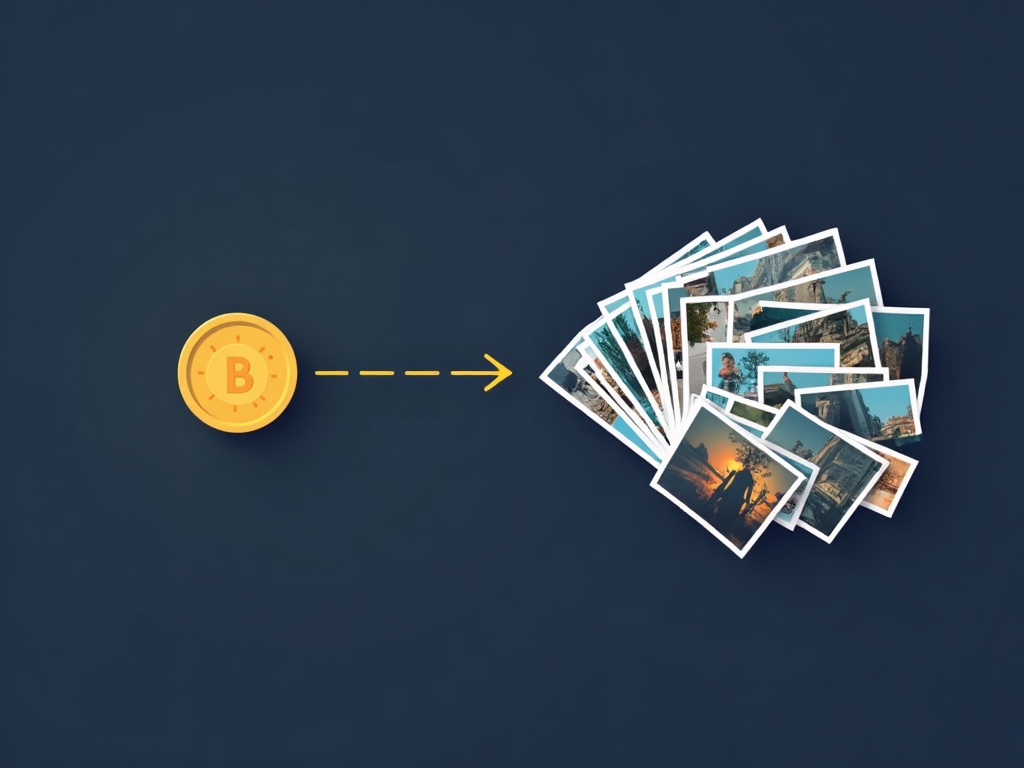
What that one fee typically gets you:
- Broad, repeated use. Put the same image on your website, a blog post, a social ad, and a slide deck without buying it again each time.
- No expiration on the use itself. In most RF licenses you can keep using it indefinitely, within the license terms.
- Non-exclusive rights. This is the catch that matters most: the same photo or track is sold to everyone else, too. Your competitor can license the exact same “perfect” image. RF is cheap because it’s shared.
Royalty-free is the right default for most creators, small businesses, and everyday content. But “broad” is not “unlimited.” Standard RF licenses still cap things – commonly a limit on print run or copies, a ban on reselling the file as-is, no use in a logo or trademark, and no putting the image on products for resale (mugs, shirts, templates) without an upgrade. Which brings us to the part buyers skip.
Rights-Managed: Pay for Exactly What You Use
Rights-managed (RM) flips the model. Instead of one fee for broad use, you license the work for one specific, defined use, and the price is calculated from the details of that use. Change the use, and you buy a new license.

An RM license is priced on factors like:
- Medium. A small blog image costs far less than the same photo on a national billboard or a magazine cover.
- Duration. You license it for a set period – say one year – not forever.
- Territory. Use in one country is cheaper than worldwide rights.
- Size and placement. A full-page spread costs more than a thumbnail.
- Exclusivity (optional). This is RM’s real superpower – you can often pay to be the only one using that image in your industry or region for a period, so it never shows up in a rival’s campaign.
RM sounds like more hassle, and for a quick social post it usually isn’t worth it. But for a high-stakes, high-visibility campaign – a brand’s flagship product launch, packaging, a major ad buy – RM gives you two things RF can’t: exclusivity, and a documented, tailored license that stands up to scrutiny. The cost is that if you later reuse the image somewhere the license didn’t cover, you’re using it without permission.
Royalty-Free vs. Rights-Managed, Side by Side
Strip away the jargon and the difference is simple:
- Fee structure. RF – pay once, use many times. RM – pay per defined use.
- Flexibility. RF – use it across lots of projects freely. RM – locked to the medium, term, and territory you licensed.
- Exclusivity. RF – never; everyone shares it. RM – available (for a price).
- Cost. RF – low and predictable. RM – variable, often higher, sometimes much higher.
- Best for. RF – blogs, social, websites, most day-to-day content. RM – premium campaigns, packaging, big ad spends, anything where you can’t afford to see the image elsewhere.
One more distinction: RF’s low price comes precisely because it’s non-exclusive. If the fact that a stranger can use your “signature” image bothers you, that feeling is worth an RM (or exclusive) license. If it doesn’t, RF will serve you well and save you money.
The Fine Print: Editorial, Extended Licenses, and Creative Commons
The royalty-free vs. rights-managed choice isn’t the only line in the license that can bite you. Three more terms trip up creators constantly:
- Editorial use only. Some images – especially of real people, brands, logos, events, or private property – are licensed for editorial use (news, commentary, blog articles) but not for commercial use (ads, promotion, packaging). Using an “editorial only” photo to sell a product is a license violation, no matter which pricing model it came under. This usually comes down to whether the shoot has a signed model release or property release.
- Extended / enhanced licenses. Want to put a stock image on merchandise you sell, use it in a template or app you distribute, or exceed the standard print or reproduction limits? Standard RF usually doesn’t cover that – you need an extended (sometimes called enhanced) license. Check before you print 5,000 tote bags (Shutterstock, License Comparison).
- Creative Commons and “public domain” are not the same as royalty-free. Creative Commons (CC) licenses are free to use but come with their own conditions – most require attribution, some ban commercial use (NC), some ban modifications (ND) (Creative Commons). True public-domain works have no copyright at all and can be used freely – but “I found it on Google” is not public domain. Confusing free-to-find with free-to-use is one of the most common – and expensive – creator mistakes.
The theme across all three: the label on the download button is a summary, not the contract. The actual permitted use lives in the license terms, and that’s what you’ll be held to.
Which One Should You Choose?
As a buyer, work backward from your use, not from the price tag:
- Blog posts, social content, your website, internal decks, most small-business marketing – standard royalty-free is almost always the smart, cost-effective pick.
- Merchandise, apps, templates, or products for resale – royalty-free with an extended license.
- A flagship campaign, packaging, or anything where a competitor using the same image would be a real problem – rights-managed, with exclusivity if the budget allows.
- Anything featuring a recognizable person, brand, or private property in a promotional context – confirm there’s a model/property release and that it’s cleared for commercial use.
As a creator licensing your own work, the same models are your pricing menu. Selling royalty-free through a stock library means volume at a low per-sale price and giving up exclusivity. Offering rights-managed or direct exclusive licenses means fewer, higher-value deals and keeping control over where your work appears. Many creators do both: RF for reach, RM/exclusive for their best pieces. Whichever you offer, spell out the medium, term, territory, and whether it’s exclusive – the same clarity you’d want as a buyer.
Your Licensing Checklist
Before you click “buy” – or before you list your own work for license – run through this:

- Match the model to the use. Broad, repeated, low-stakes use – royalty-free. One high-value or exclusive use – rights-managed.
- Read what the fee actually covers. Print limits, number of copies, and whether reuse across projects is included.
- Check for “editorial only.” If you’re selling or promoting, you need commercial rights and the underlying releases.
- Confirm exclusivity – or accept there isn’t any. RF means others can use it too. If that’s a dealbreaker, pay for RM/exclusive.
- Get an extended license for merchandise or resale. Standard licenses rarely cover products you sell.
- Don’t confuse free-to-find with free-to-use. Verify Creative Commons terms (attribution? non-commercial?) and never assume public domain.
- Keep the receipt and the license. Save proof of what you licensed and when – it’s your evidence that the use was authorized.
Licensing terms feel like fine print because they are – but they’re the fine print that decides whether your use is protected or exposed. Spend five minutes matching the license to what you’re actually doing, and “royalty-free or rights-managed?” stops being a coin flip and becomes a decision you can defend.
IPSurge helps creators and small businesses understand and protect their intellectual property – the ideas, names, and work that make them unique. This article is general information, not legal advice.
Sources & further reading:
- U.S. Copyright Office – Circular 1: Copyright Basics
- Creative Commons – About CC Licenses
- Shutterstock – License Comparison
- Getty Images – Content Licensing