In the past few years, some of the biggest names in music — Bob Dylan, Bruce Springsteen, Stevie Nicks, Neil Young, and dozens more — have sold their song catalogs for sums that read like lottery jackpots, often hundreds of millions of dollars. It’s easy to assume this is a billionaire’s game, something only legends with stadium-sized back catalogs ever do. But the same kind of deal, scaled down, is now happening to working songwriters, indie artists, and producers whose steady streaming royalties have become a thing investors want to buy.
Which raises the obvious, slightly unsettling question: why would anyone sell the songs they poured their life into? And if someone offered you a lump sum for your rights, how would you even know whether it’s a good deal? Let’s walk through what a catalog sale actually is, why artists do it, and the honest trade-offs to weigh before you sign anything.

What You’re Actually Selling
“Selling your catalog” sounds like one thing, but a song is really a bundle of separate rights that can be sold together or split apart. Understanding the pieces is the whole game.
Track the cases yourself
Every current AI-copyright ruling — and the ones still being fought — lives in our AI Copyright Ruling Tracker. Filter by your creator type to see, in plain language, how each case affects your rights.
- The songwriting (publishing) copyright — the underlying composition: the melody and lyrics you wrote. This is what generates mechanical royalties (from streams and sales), performance royalties (from radio, streaming, and live play, collected through groups like ASCAP or BMI), and sync fees (when your song is placed in a film, show, game, or ad).
- The master recording — the specific recorded version. If you’re an independent artist who recorded your own tracks, you may own these too; if you signed to a label, the label often does.
A “catalog sale” can mean selling the publishing, the masters, or both — and even within publishing, you can sell your writer’s share, your publisher’s share, or a slice of each. That flexibility matters enormously, because selling everything and selling a carefully chosen piece are very different decisions. For the bigger picture of what rights live inside your work, our primer on valuing your IP and what your brand and catalog are actually worth is a useful companion.
Why Artists Sell
Nobody sells their life’s work on a whim. The reasons tend to cluster around a few very human motivations:
- A large, certain sum now. Royalties trickle in over decades and bounce around with trends. A sale converts that uncertain future stream into one big, bankable number today — money you can use to buy a home, fund a business, or simply stop worrying.
- Diversification. For many artists, nearly their entire net worth is tied up in a handful of songs. Selling some or all of it spreads the risk, the same way you wouldn’t want every dollar in a single stock.
- Estate and tax planning. Passing a catalog to heirs can create messy valuation fights and tax bills. Some artists sell to simplify their estate, lock in today’s favorable tax treatment, or avoid leaving family members to manage a complicated rights business they don’t understand.
- Retirement, health, or life changes. A reliable lump sum can fund a comfortable retirement or cover a medical situation far more predictably than waiting on quarterly royalty statements.
- Timing the market. When buyers are paying high multiples (as they have been recently), selling at the top can be simply shrewd.
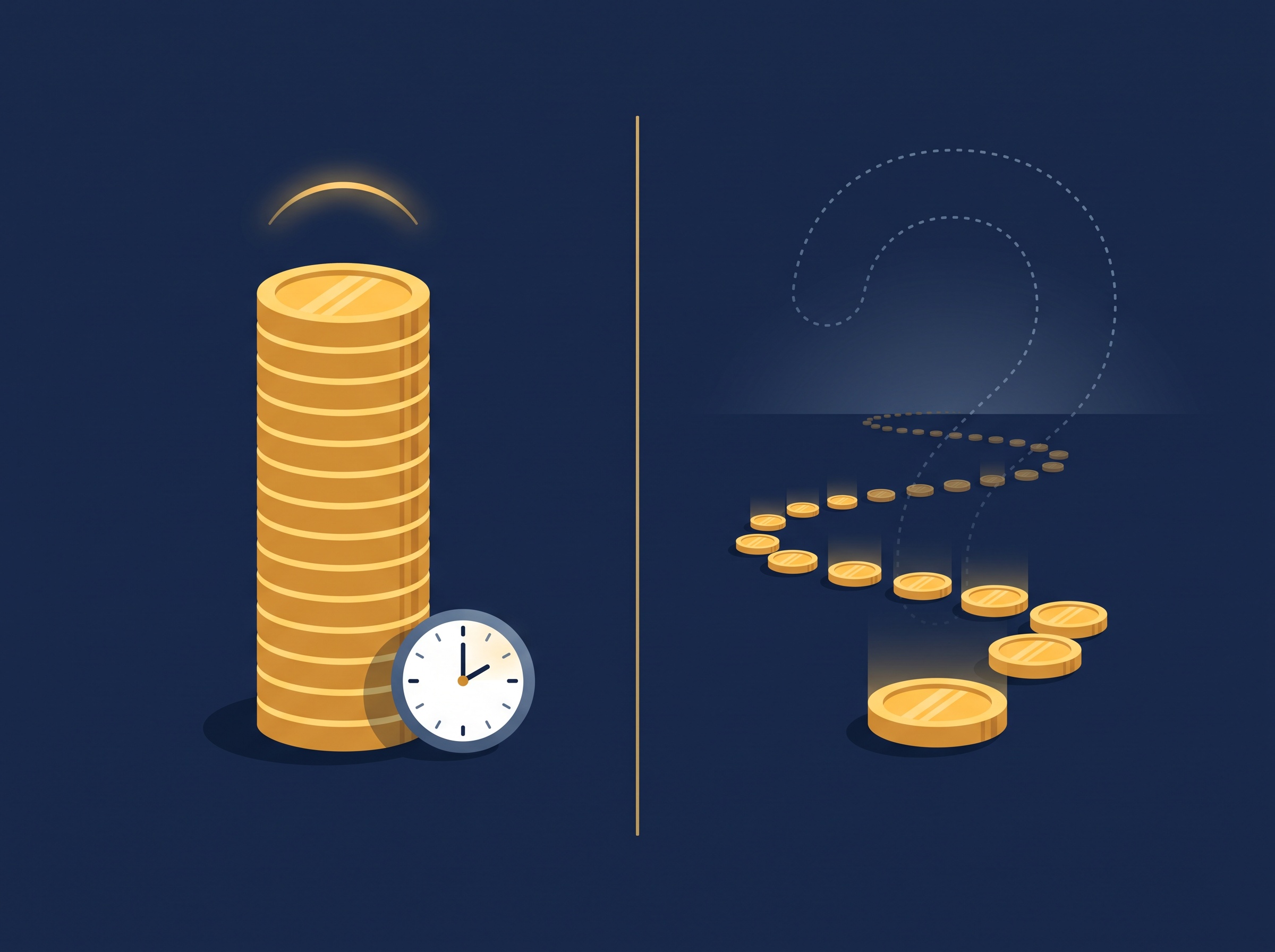
Notice the thread running through all of these: the sale trades uncertainty for certainty. That’s the real transaction, and whether it’s wise depends entirely on your own circumstances, not on what Dylan did.
How a Catalog Gets Valued
Buyers don’t pay based on how much you love a song. They pay based on how reliably it earns. The headline method is a multiple of annual earnings: a buyer looks at what the catalog generates in a typical year — often measured as “net publisher share,” the income left after collection costs and co-writer splits — and offers some multiple of it.
What pushes that multiple up or down comes down to a few factors:
- Stability. A catalog that earns the same steady amount year after year (think evergreen hits that get played at weddings forever) is worth more per dollar than one that spiked once and is fading.
- Decay rate. New releases earn big then taper; older catalogs that have flattened out to a dependable floor are, counterintuitively, often more attractive because the future is easier to predict.
- Sync potential. Songs that get licensed into ads and films carry extra upside — and extra value.
- Ownership cleanliness. Clear, well-documented rights with no co-writer disputes sell faster and for more. This is where good paperwork literally pays.
The mechanics mirror any business sale. If you want to see how IP generally changes hands in a transaction, our guide to selling your business’s IP and how brands and catalogs change hands covers the deal structure side.
What You Give Up
Here’s the part the press releases skip. When you sell your rights, the money is real — but so is the loss:
- All future upside. If a song you sold suddenly explodes in a TV finale or a viral trend five years from now, that windfall belongs to the buyer, not you.
- Control over licensing. The new owner can place your song in contexts you might hate — a political ad, a product you’d never endorse, a brand that clashes with your values. Some deals let you keep approval rights over syncs; many don’t. Read this clause carefully.
- The emotional cost. For some artists, a song is identity, not inventory. Selling it can feel like selling a piece of yourself, and no amount of money fully erases that.

None of this means selling is wrong — plenty of artists are thrilled with their deals. It means the decision deserves the same clear-eyed weighing you’d give any sale of something irreplaceable.
The Fine Print: Termination Rights, Taxes, and Partial Sales
Three details catch sellers off guard and are worth knowing before any conversation gets serious.
Termination rights. U.S. copyright law contains a remarkable, often-overlooked provision: under 17 U.S.C. § 203, an author (or their heirs) can generally terminate a transfer of a copyright made on or after January 1, 1978, during a five-year window starting 35 years after the grant. In plain terms, the law gives creators a potential second bite at the apple — a chance to claw rights back decades later. This right can’t simply be signed away in advance, and it makes catalog sales more complicated (and more interesting) than a normal sale of property. Buyers price this reality in, and it’s a major reason you want specialized counsel.
Taxes. A catalog sale is typically a sale of a capital asset, which can be taxed very differently — and often more favorably — than ordinary royalty income. The exact treatment depends on your situation, how the deal is structured, and current law, so the tax angle alone is worth a dedicated conversation with a professional before you agree to anything.
You don’t have to sell everything. Perhaps the most freeing point: a sale isn’t all-or-nothing. You can sell a percentage, sell the publishing while keeping your masters, carve out specific songs, or retain sync-approval rights. A well-structured partial sale can hand you a meaningful lump sum while keeping skin in the game and some creative control.

What This Means for You
If you’re a working songwriter or independent artist with real royalty income, you’re in a world where your catalog is a genuine, sellable asset — and that’s good news whether or not you ever sell. The decision comes down to one question: is trading an uncertain future stream for a certain sum today the right move for your life, not someone else’s? Here’s how to approach it:
- Get your paperwork clean first. Clear ownership, documented co-writer splits, and registered copyrights raise your value and speed any deal. This is worth doing even if you never sell.
- Know exactly what you own. Separate your publishing from your masters, and your writer’s share from your publisher’s share, before anyone makes an offer.
- Get an independent valuation. Don’t rely on the buyer’s number. Understand your catalog’s annual earnings and realistic multiple so you can judge whether an offer is fair.
- Weigh a partial sale. Ask whether selling a slice — or the publishing but not the masters — gets you what you need while keeping upside and control.
- Hire specialists. A music attorney and a tax professional who do catalog deals regularly will earn their fee many times over, especially on termination rights and tax structure.
Selling your catalog can be a brilliant financial move or a decision you regret — and the difference is almost never the price. It’s whether you understood what you were trading away and chose it deliberately.
This article is general information, not legal, tax, or financial advice. Copyright, termination rights (17 U.S.C. § 203), and the tax treatment of a catalog sale are complex and fact-specific, and the rules differ outside the United States. Before selling or transferring any music rights, consult a qualified music attorney and a tax professional who handle catalog transactions.
IPSurge helps creators, musicians, and small businesses understand and protect their intellectual property — the names, work, and ideas that make them unique.
Sources & further reading:
- Copyright Basics (Circular 1) — U.S. Copyright Office
- Duration of Copyright (Circular 15a) — U.S. Copyright Office
- Termination of Transfers and Licenses (17 U.S.C. § 203) — Legal Information Institute, Cornell Law School
- Copyright and Your Music — The Mechanical Licensing Collective (The MLC)
- How Royalties Work — ASCAP