You made something. A gadget, a tool, a clever mechanism that solves a real problem – and the moment you show it to people, someone says it: “You should patent that before somebody steals it.” It feels like the responsible next step, the thing serious inventors do. So you start Googling, and within an hour you’re staring at fee schedules, attorney quotes, and words like “non-obvious” and “prior art,” wondering what you’ve gotten into.
Here’s the honest version most patent-marketing sites won’t lead with: for a lot of solo inventors, a patent is the wrong first move – or at least not the urgent one it feels like. A patent can be genuinely valuable, but it’s expensive, slow, and only worth something if you’re willing and able to enforce it. This is a plain-language reality check to help you decide, before you spend the money. (This is general information, not legal advice; for a specific invention, talk to a registered patent attorney or agent.)

What a Patent Actually Gives You (and What It Doesn’t)
A patent does not give you the right to make or sell your invention. That surprises people. What it gives you is the right to stop other people from making, using, selling, or importing your invention for a limited time – roughly 20 years from your filing date for a standard utility patent. It’s a right to exclude, and it’s only as strong as your ability to actually go after someone who ignores it.
Track the cases yourself
Every current AI-copyright ruling — and the ones still being fought — lives in our AI Copyright Ruling Tracker. Filter by your creator type to see, in plain language, how each case affects your rights.
Two other limits matter for solo inventors. First, patents are territorial: a U.S. patent only protects you in the U.S. If a factory overseas copies your product and sells it there, your U.S. patent does nothing until those goods try to enter the country. Protecting yourself in multiple countries means filing – and paying – in each of them. Second, a granted patent is public. In exchange for that 20-year monopoly, you publish a detailed blueprint of how your invention works. Anyone can read it, learn from it, and design around it.
The Real Cost and Timeline (No Sugarcoating)
This is where the reality check bites. A utility patent is not a one-time “filing fee.” The U.S. Patent and Trademark Office (USPTO) charges a stack of fees – filing, search, examination, and later issue and maintenance fees – and those are discounted heavily for “small” and “micro” entities, which most solo inventors qualify as. The bigger number is usually the attorney or patent agent who drafts and argues your application, because a patent written badly may be worthless even if it’s granted.
Realistically, a professionally prepared utility patent commonly runs from several thousand dollars into the $10,000-$20,000+ range by the time it’s granted, spread over the process – and you’ll owe periodic maintenance fees for years afterward to keep it alive. On top of the money, there’s time: it frequently takes two to three years (sometimes longer) from filing to a granted patent. If your product’s whole commercial life is 18 months of a trend, a patent may issue after the window has already closed.
Do You Even Have Something Patentable?
Before cost matters, ask whether your idea qualifies at all. To earn a utility patent, an invention generally has to clear three bars: it must be useful, novel (new – not already out there), and non-obvious (not just an obvious tweak an expert in the field would make). That last one trips up more inventors than any other. “Nobody sells exactly this” is not the same as non-obvious.
A few common disqualifiers to know:
- You already made it public. Selling it, crowdfunding it, or posting a full how-it-works demo can start a clock – or, outside the U.S., destroy your rights entirely. The U.S. gives a limited one-year grace period after your own public disclosure; most other countries do not. If you might ever want a patent, be careful what you reveal and when.
- It’s an idea, not an invention. You can’t patent a concept, a business plan, or “an app that does X.” You patent a specific, described way of doing something.
- Someone got there first. A quick search of existing patents and products (“prior art”) often turns up something close enough to sink you. Doing this early, before you spend on an attorney, saves real money.
The Enforcement Trap Nobody Warns You About
Say you get the patent. A copycat shows up on Amazon selling a near-identical product for half your price. Now what? The patent doesn’t enforce itself. Stopping them means sending legal demands and, if they don’t fold, suing – and patent litigation is famously one of the most expensive kinds of lawsuit there is, routinely costing far more than the patent itself, often well into six figures.
This is the quiet reason a patent can become an expensive wall decoration. A right you can’t afford to defend gives a well-funded copycat little reason to respect it. Before you file, ask yourself honestly: if someone infringes, do I have the money and the appetite to fight – or a licensing partner who does? If the answer is no, the patent’s practical value drops sharply, and that should shape whether you spend on it now.
Cheaper Alternatives That Might Serve You Better
“No patent yet” doesn’t mean “no protection.” Depending on your situation, one of these may be a smarter first step:
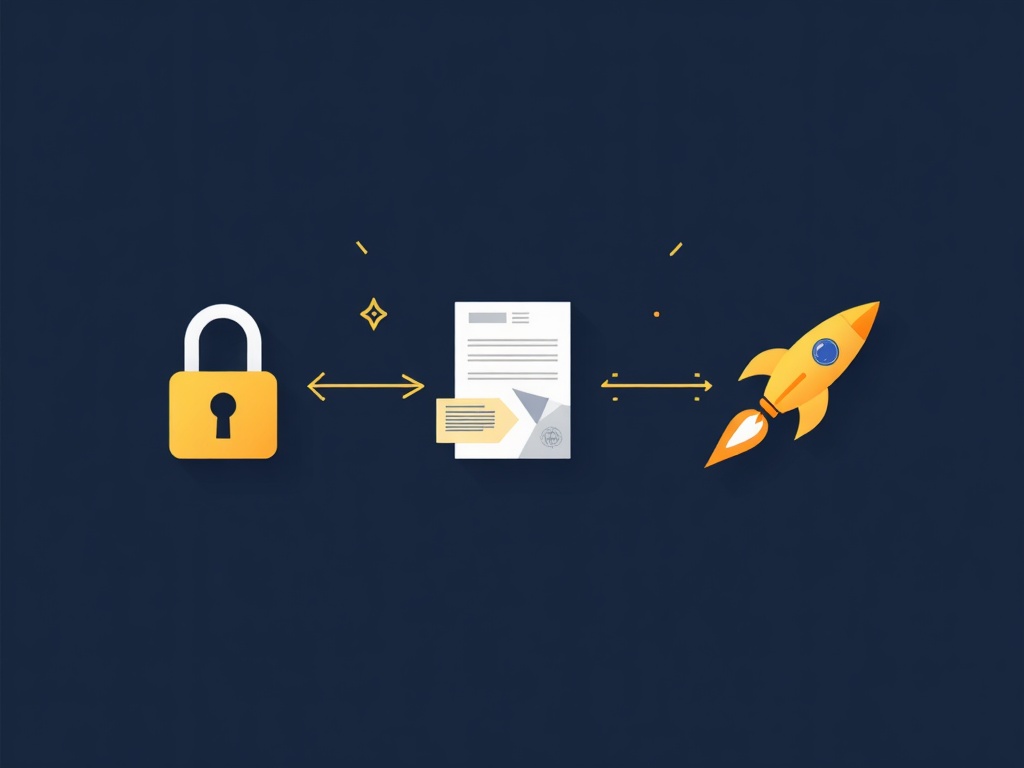
- A provisional application. For a modest USPTO filing fee (roughly $65 to $325 depending on your entity size, plus any help you pay for), you can file a provisional patent application. It doesn’t get examined and never becomes a patent by itself, but it secures a filing date, lets you legally say “patent pending,” and buys you 12 months to test the market before committing to the full, expensive non-provisional application. Miss that 12-month deadline and the provisional simply expires – it’s a placeholder, not a patent.
- Trade secret. If your edge is something you can actually keep hidden – a formula, a process, a recipe, a manufacturing trick that isn’t obvious from the finished product – keeping it secret can protect you indefinitely and costs nothing to “file.” The catch: the moment it’s out (or someone reverse-engineers it), the protection is gone. Trade secret and patent are mutually exclusive, since a patent publishes the very thing a secret hides.
- Design patent. If what’s special is how your product looks rather than how it works, a design patent protects that ornamental appearance and is generally cheaper and faster than a utility patent.
- Speed and brand. For many solo makers, the real moat is being first, building a loyal audience, and owning a recognizable brand name (protected by a trademark, not a patent). By the time a copycat catches up, you’re the known original.
A Simple Framework: Should You File?
Strip away the anxiety and it comes down to a few honest questions. Lean toward a patent when several of these are “yes”:
- Is the invention genuinely novel and non-obvious? A quick prior-art search says you’re not reinventing something that already exists.
- Is there real money at stake over years, not months? A durable product or a market big enough that a monopoly is worth $10k+ and a multi-year wait.
- Can it be copied from the finished product? If yes, a trade secret won’t help and a patent starts to make sense. If the secret is safely locked inside, maybe keep it secret.
- Could you actually enforce it – or license it to someone who can? Investors, a manufacturer, or a licensing deal often supply the muscle a solo inventor lacks.
If you’re early, unsure, or cash-tight, a sensible path is often: do a prior-art search yourself, file a provisional to lock in your date and start saying “patent pending,” then use those 12 months to see whether the product actually sells before you spend real money on the full application. That way you protect your option without betting the rent on it.
The pressure to “patent it before someone steals it” is real, but rushing to file is how solo inventors burn thousands on a right they never use. A patent is a business tool, not a trophy – and the smartest inventors decide with a clear head, not a panicked one.
IPSurge helps creators, makers, and small businesses understand and protect their intellectual property – the ideas, names, and work that make them unique. This article is general information, not legal advice.
Sources & further reading:
- USPTO – Patent Basics
- USPTO – Provisional Application for Patent
- USPTO – General Information Concerning Patents
- USPTO – Fee Schedule
- USPTO – Trade Secret Policy