Picture an inventor who never sleeps, never asks for royalties, and files patents for ideas no human explicitly told it to have. That’s roughly the pitch behind DABUS — an artificial intelligence that its creator says dreamed up two genuine inventions on its own. Then came the real experiment: could that AI be listed as the inventor on the patent paperwork? The answer, tested in courtroom after courtroom across the world, turned into one of the most important IP stories of the decade.
You don’t need to be a patent lawyer to care. As AI creeps into every design tool, drafting studio, and lab, the question “who invented this?” stops being philosophical and starts affecting who can actually own — and protect — the things they make with these tools. Here’s the DABUS saga in plain language, and what it means for you.
Meet DABUS, the Machine That Filed for Patents
DABUS stands for “Device for the Autonomous Bootstrapping of Unified Sentience” — a neural-network system built by Dr. Stephen Thaler, a US physicist and AI researcher. Thaler claims DABUS independently generated two inventions: a food and beverage container with a fractal-inspired surface designed to interlock and improve grip and heat transfer, and a flashing emergency light beacon he nicknamed the “neural flame,” meant to pulse in a pattern that grabs human attention.
Track the cases yourself
Every current AI-copyright ruling — and the ones still being fought — lives in our AI Copyright Ruling Tracker. Filter by your creator type to see, in plain language, how each case affects your rights.
Whether an AI can truly “invent” anything on its own is hotly debated. But Thaler didn’t just build DABUS — he ran a deliberate legal campaign. Starting around 2018, he filed patent applications for those two inventions in more than a dozen countries, and on each one he listed the inventor not as himself but as DABUS, the machine. He wasn’t trying to hide the AI. He was trying to force every major patent office on earth to answer a single question: does an inventor have to be human?
What the Patent Offices Actually Said
The verdicts came in, and they were remarkably consistent. In the United States, the Patent and Trademark Office rejected the applications, and the Court of Appeals for the Federal Circuit backed it up in Thaler v. Vidal (2022). The court’s reasoning was almost dry: the Patent Act repeatedly refers to an inventor as an “individual,” and an individual means a natural person — a human being. The Supreme Court declined to take the case in 2023, leaving that ruling as the law of the land.
The United Kingdom reached the same destination and made it emphatic. In December 2023, the UK Supreme Court unanimously ruled in Thaler v Comptroller-General that an inventor under UK patent law must be a natural person, full stop. DABUS is a machine, not a person, so it could not be named — and because Thaler’s claim to own the patents rested entirely on DABUS being the inventor, that claim collapsed too.
The European Patent Office landed in the same place. Its Legal Board of Appeal upheld the refusals, holding that under the European Patent Convention an inventor must be a person with legal capacity. A machine has no legal capacity, cannot be an employee, cannot transfer rights, and cannot be named. Australia briefly bucked the trend — a single Federal Court judge ruled in 2021 that an AI could be an inventor — but that decision was overturned on appeal by the Full Federal Court in 2022, and the High Court declined to revisit it.
The One Place That Said Yes
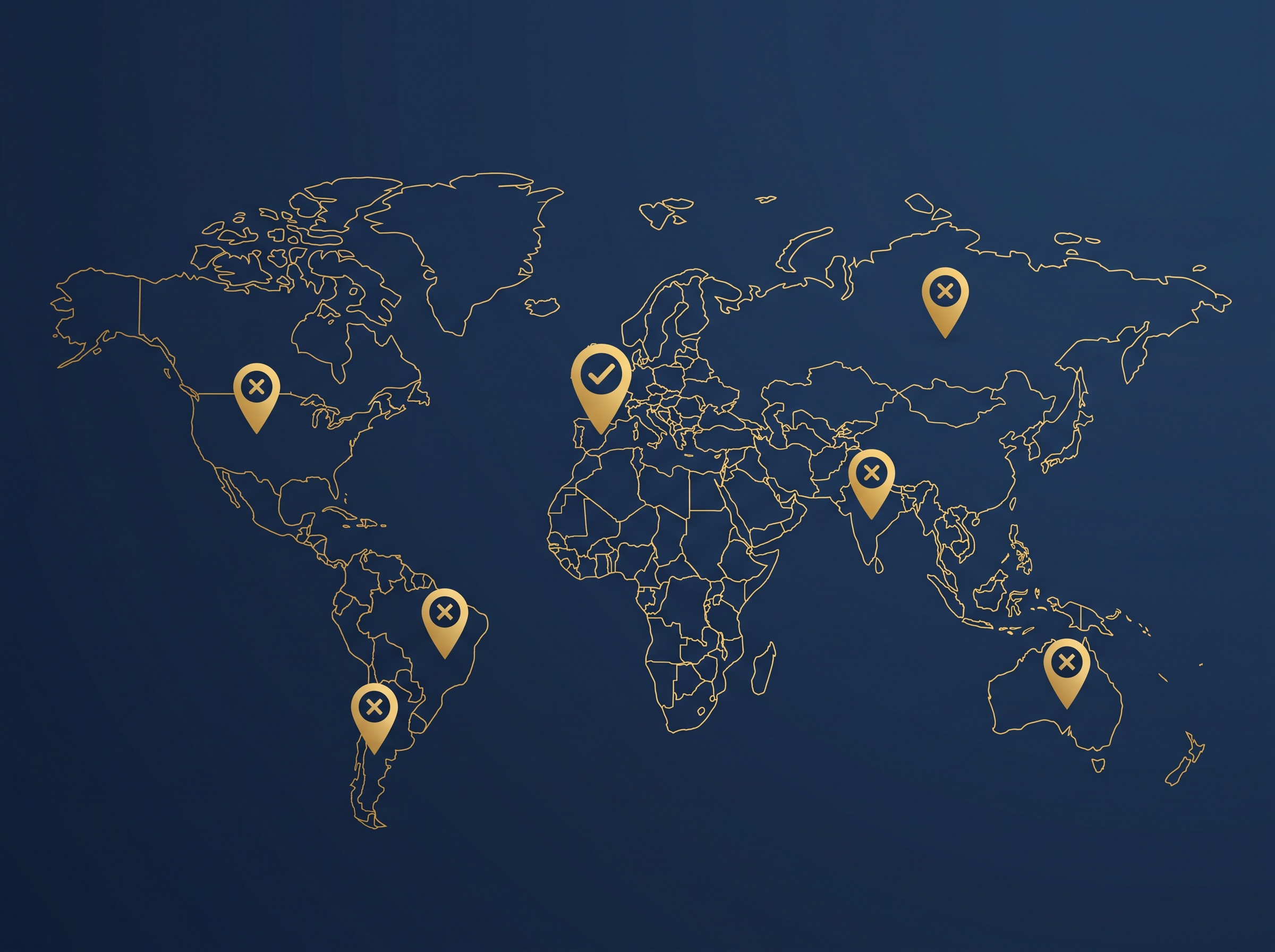
There is a famous asterisk. In 2021, South Africa granted a DABUS patent listing the AI as inventor — the first country in the world to do so. Headlines treated it as a breakthrough. The reality is more mundane: South Africa’s patent office does not perform substantive examination the way the US, UK, and EPO do. It largely checks that the paperwork is complete and the fees are paid, then registers the patent. Nobody there sat down and legally decided that an AI qualifies as an inventor; the application simply wasn’t scrutinized on that point.
So the “AI can be an inventor” win is best understood as a formality of one filing system, not a considered legal ruling. In every jurisdiction that actually examined the question on the merits, the answer was no. That’s the honest scoreboard.
Why “Inventor Must Be Human” Even Matters
This might sound like a technicality about a name on a form. It isn’t. Patent systems are built on a chain of human rights and duties that an AI simply can’t stand in for:
- Ownership has to start somewhere. Patent rights originate with the inventor and then get assigned — to an employer, a company, a buyer. A machine can’t own property or sign an assignment, so if the AI is the inventor, there’s a broken link at the very start of the chain.
- Inventors take on legal duties. They sign oaths, they can be held to a duty of candor, they can be deposed. You can’t put a neural network under oath.
- The whole system is meant to reward and motivate people. Patents exist to give humans an incentive to invent and disclose. An AI doesn’t need a twenty-year monopoly to keep working.
Reject the human requirement and you don’t just add a new kind of inventor — you knock out the legal scaffolding the rest of patent law hangs on. That’s why courts have been so reluctant, even when they acknowledge AI clearly played a role.
What This Means for You If You Invent With AI
Here’s the part that actually touches your work — because the DABUS ruling is not “you can’t patent anything that involved AI.” That would be a disaster in 2026, when AI sits inside half the design and engineering tools people use. The real rule is narrower and more workable.
You absolutely can patent an invention you created with the help of AI. What you cannot do is name the AI as the inventor, or file something no human meaningfully contributed to. In early 2024 the USPTO put out formal guidance on exactly this: AI-assisted inventions are patentable as long as a natural person made a significant contribution to the claimed invention. The AI is treated like a very powerful tool — the way a spreadsheet, a simulation, or a lab robot is a tool. The human who directed it, shaped the idea, recognized the useful result, and refined it into a real invention is the inventor.
Practically, that means:
- A human has to be named. Every inventor listed on your application must be a real person who genuinely contributed to conceiving the invention — not a rubber stamp, and not the AI.
- “Significant contribution” is the test. Merely owning the AI, or typing a one-line prompt and patenting whatever popped out, may not be enough. The stronger your fingerprints are on the actual inventive idea, the safer you are.
- Document your role. Keep notes on how you steered the tool, what you decided, and what you contributed. If inventorship is ever challenged, that record is your proof.
In other words: use AI freely, but stay in the driver’s seat, and make sure a human — probably you — did real inventive work.
The Rules Are Still Being Written
Thaler lost almost everywhere, but he arguably won the larger point: he forced the question into the open years before it would have arrived on its own. Patent offices, courts, and lawmakers are now actively wrestling with how to handle AI’s growing role, and the guidance will keep evolving. The current consensus — human inventor required, AI as a tool — is stable for now, but “for now” is doing some work in a field moving this fast.
If you’re inventing with AI today, the safe path is clear: build real human contribution into your process, name the people who actually contributed, keep records, and don’t try to list your model on the form. Do that, and the DABUS saga works in your favor — it clarified the rules rather than closing the door.
This article is general information, not legal advice. Patent law is technical and varies by country, and inventorship disputes can sink a patent. For a specific invention — especially one with heavy AI involvement — talk to a qualified patent attorney before you file.
IPSurge helps creators and small businesses understand and protect their intellectual property — the ideas, names, and work that make them unique.
Sources & further reading:
- US Court of Appeals for the Federal Circuit — Thaler v. Vidal (2022)
- UK Supreme Court — Thaler v Comptroller-General [2023] UKSC 49
- European Patent Office — Decisions J 8/20 and J 9/20 (DABUS)
- USPTO — Inventorship Guidance for AI-Assisted Inventions (Feb 2024)
- WIPO Magazine — The DABUS case and AI inventorship