Every creator hits this wall eventually. You want to react to a clip, quote a review, remix a track, drop a movie still into a video essay, or turn a famous image into a meme – and a little voice says, “It’s fine, it’s fair use.” Sometimes that voice is right. A lot of the time it’s about to get you a copyright strike, a demonetized video, or a very unpleasant letter.
Fair use is real, it’s powerful, and it’s the legal doctrine that makes commentary, criticism, parody, and journalism possible. But it’s also one of the most misunderstood ideas in all of copyright. So let’s cut through it: what fair use actually is, what you can and can’t safely borrow in 2026, and how to lower your risk. (“IP” here means intellectual property, and this is plain-language guidance, not legal advice.)
Fair use is a defense, not a permission slip
Here’s the mindset shift that changes everything: fair use is not a right you claim before you use something. It’s a defense you raise after you’ve been accused of infringement. Legally, using someone’s copyrighted work is infringement – fair use is the argument that this particular infringement should be excused.
Track the cases yourself
Every current AI-copyright ruling — and the ones still being fought — lives in our AI Copyright Ruling Tracker. Filter by your creator type to see, in plain language, how each case affects your rights.
That matters because it means fair use is never guaranteed in advance. There’s no form to file, no box to check, no threshold that automatically makes you safe. A judge decides, case by case, after weighing the specifics. When creators say “this is definitely fair use,” what they really mean is “I think a court would side with me” – and reasonable people (and expensive lawyers) disagree about that all the time.
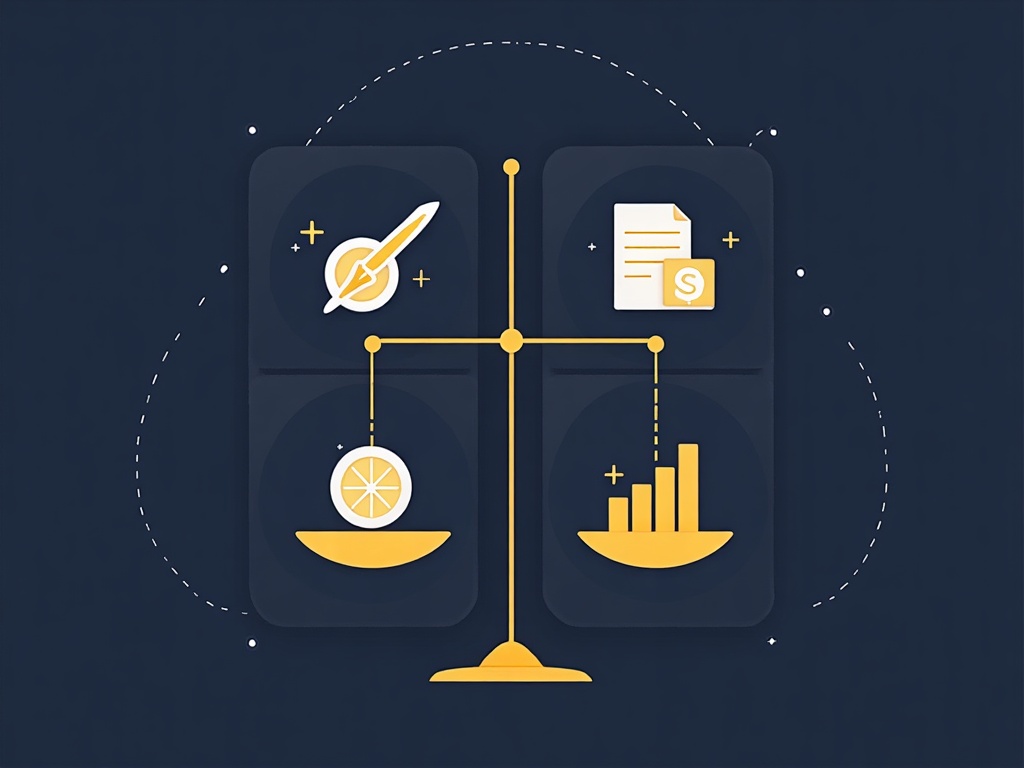
The doctrine lives in 17 U.S.C. Section 107, which tells courts to weigh four factors together. None of them wins alone; they’re balanced against each other in light of copyright’s purpose, which is to encourage creativity, not to lock everything down.
The four factors, in plain English
Every fair use question comes down to these four, and it’s worth understanding what each one is really asking.
1. Purpose and character of your use. Are you doing something genuinely different with the work – commenting on it, criticizing it, parodying it, teaching with it, reporting news – or just re-sharing it? Uses that add new meaning or message (“transformative” uses) lean toward fair. Uses that are commercial and simply substitute for the original lean against it. This is usually the most important factor.
2. Nature of the copyrighted work. Borrowing from factual work (a news report, a nonfiction book) is treated more generously than borrowing from highly creative work (a song, a film, a novel). Copyright protects expression more fiercely than facts.
3. Amount and substantiality used. How much did you take, and how central was it? Using a small, reasonable slice helps you. But even a short clip can sink you if it’s the “heart” of the work – the hook of the song, the twist of the film, the money shot of the photo.
4. Effect on the market. Does your use compete with or replace the original, or undercut a market the creator could license into? If people watch your version instead of buying theirs, that’s a serious problem. This factor is often decisive.
Transformative use – and how the Warhol case narrowed it
For years, “transformative” was the magic word creators leaned on: change it enough, add your own spin, and you’re covered. In 2023 the Supreme Court tightened that logic hard in Andy Warhol Foundation v. Goldsmith.
The case involved Warhol silkscreens based on a photographer’s portrait of Prince. The Court didn’t ask “is a Warhol different from a photograph?” in the abstract – obviously it looks different. Instead it zeroed in on the specific use being challenged: licensing the Warhol image to illustrate a magazine article about Prince. That use served the same basic purpose as the original photo – illustrating an article about Prince – and it was commercial. So the first factor favored the photographer.
The takeaway for creators: a new look or new aesthetic isn’t automatically transformative. What matters is whether your use has a genuinely different purpose from the original. Criticizing, mocking, analyzing, or reporting on a work is a different purpose. Simply making a slicker or prettier version of it, and using it the same way the original was used, probably isn’t. When your use is commercial and serves a similar purpose, the Court said you need a “particularly compelling justification.”
The myths that get creators sued
Most fair use disasters trace back to a handful of comforting rules that simply aren’t true.
“I gave them credit, so it’s fine.” Credit is about plagiarism and etiquette, not copyright. Attribution does not turn infringement into fair use. You can name the creator beautifully and still be liable.
“It’s non-commercial, so I’m safe.” Non-commercial use helps under factor one, but it doesn’t win the case. Plenty of non-commercial uses have lost, and plenty of commercial uses (news, criticism, parody) have won.
“I only used 30 seconds” (or 10 percent, or 8 bars). There is no magic quantity that’s automatically legal. These numbers are internet folklore. A few seconds can be infringing if it’s the heart of the work; longer excerpts can be fair if the purpose justifies it.
“It was already all over the internet.” A work being widely shared, unwatermarked, or easy to find says nothing about whether you can legally reuse it.
“I added a disclaimer saying ‘no copyright intended.'” That phrase has no legal effect whatsoever. It’s the digital equivalent of a wish.
Real creator scenarios: safer vs. riskier
Abstract factors are hard to apply, so here’s how they tend to play out in the wild. None of these are guarantees – they’re the direction the wind usually blows.
Leans safer:
- Criticism and review that quotes limited portions to make a point about the work – a book review with short excerpts, a video essay analyzing a film with brief clips.
- Parody that targets and comments on the original work itself (not just using a famous song to be funny about something unrelated).
- Commentary and education where the borrowed material is genuinely the subject of your analysis, and you use only what you need.
- News reporting that uses a portion of a work to inform the public about a real event.
Leans riskier:
- Reaction videos that play long, largely unedited stretches of someone else’s content with minimal added commentary – you’re closer to re-broadcasting than transforming.
- Memes and edits using recent, commercially valuable film, TV, or music – popular and rarely enforced, but not automatically fair use.
- Sampling and remixing music without a license – sampling is a licensing world of its own, and fair use rarely rescues it.
- Using a photo or image to illustrate your own post the same way the photographer would license it. That’s the exact scenario Warhol lost.
How to lower your risk before you hit publish
You can’t buy a fair use guarantee, but you can stack the odds in your favor with a quick routine:
- Have a real purpose. Ask yourself honestly: am I commenting on, criticizing, or teaching about this work – or just reusing it because it’s good? Add your own substantial voice, analysis, or creativity.
- Take only what you need. Use the shortest clip, smallest crop, or fewest words that still make your point. Never default to “the whole thing.”
- Avoid the heart. Don’t build your piece around the single most iconic moment of the original if you can make your point another way.
- Don’t compete with the original. If your use could replace someone buying, streaming, or licensing the real thing, rethink it.
- License when it’s cheap or the stakes are high. Stock, music libraries, and direct permission exist for a reason. For anything commercial or high-visibility, paying for a license is often cheaper than the fight.
- Know your platform’s rules. YouTube’s Content ID, for example, can flag or demonetize you regardless of whether a court would call it fair use. Platform enforcement and the law are two different battles.
What this means for you
Fair use is one of the most valuable tools a creator has – it’s what lets you review, critique, parody, teach, and comment without asking permission. But it’s a judgment call, not a shield you can wave in advance, and the 2026 landscape after Warhol rewards genuine transformation of purpose over surface-level changes.
So use it – deliberately. Borrow to say something, not just to reuse something. Take the minimum, add real value, and steer clear of directly competing with the work you’re drawing from. When a project is commercial, high-profile, or built entirely around someone else’s material, treat that as your cue to either license it or run it past a professional. The creators who get burned are almost always the ones who assumed fair use was automatic. The ones who thrive treat it as what it is: a powerful defense worth earning.
This article is general information, not legal advice. Fair use is fact-specific and decided case by case, so for a high-stakes use, get a qualified copyright attorney’s read before you publish.
Sources & further reading:
- U.S. Copyright Office – More Information on Fair Use
- 17 U.S.C. Section 107 – Limitations on exclusive rights: Fair use (Cornell LII)
- U.S. Copyright Office – Fair Use Index
- Stanford Libraries – Measuring Fair Use: The Four Factors
- Andy Warhol Foundation for Visual Arts, Inc. v. Goldsmith (SCOTUS 2023) – Goodwin analysis