You typed a prompt, tweaked it a dozen times, maybe painted over the result — and now you have something you love. The obvious next question: is it yours? Can you copyright AI-generated art, stop other people from copying it, and sell it with confidence?
Here is the honest, plain-English answer for creators in 2026 — no law degree required.
The short answer
Purely AI-generated art — where you typed a prompt and accepted what the machine produced — cannot be copyrighted in the United States. But art where you made meaningful creative choices and contributions can be, at least for the human parts. The dividing line is a single idea: human authorship.
That is not a hot take. It is now settled law.
What the courts actually decided
In March 2026, the U.S. Supreme Court declined to hear Thaler v. Perlmutter, letting stand a ruling that copyright protection requires a human author. A machine, on its own, cannot hold a copyright — and neither can the person who merely owns or operated the machine, if the creative choices were made by the AI.
The U.S. Copyright Office has said the same thing in its own guidance: it will register a work that contains AI-generated material only to the extent a human contributed the copyrightable expression. Prompt-and-accept output, by itself, is not enough.
What this means for you: the copyright question is not “did a computer help?” It is “how much of the final work came from a human mind?”
Track the cases yourself
Every ruling on this page — and the ones still being fought — lives in our AI Copyright Ruling Tracker. Filter by your creator type to see, in plain language, how each case affects your rights.
Where your work crosses the line into “yours”
You move from unprotectable to protectable as you add genuine human creativity. Things that strengthen your claim:
- Meaningful editing and painting over the AI output — changing composition, redrawing elements, hand-finishing.
- Arranging and selecting multiple AI pieces into an original layout, comic, or collage (the arrangement can be yours even if individual pieces are not).
- Combining AI elements with your own hand-drawn, photographed, or written work.
- Substantial creative direction expressed in the work itself — not just a clever prompt, but human choices visible in the final result.
A pure one-click generation sits on the unprotectable side. A piece you meaningfully authored, using AI as one tool among many, sits on the protectable side — for your contributions.
“But I spent hours on the prompt”
This is the part that stings, so let’s be clear: effort is not authorship. Spending hours refining a text prompt does not, by itself, give you copyright in the image the model returns — the current view treats the prompt as an idea or instruction, and the machine as the thing that executed it. Copyright protects human expression, not the labor of instructing a tool.
That can feel unfair. But it also points straight at the fix: put more of you into the final work.
What creators should actually do
Practical steps that protect you, starting today:
- Keep your work-in-progress files. Layered files, edit history, sketches, and version saves are your proof of human authorship if anyone ever questions it.
- Do real creative work on top of AI output when you intend to own and sell a piece — don’t ship raw generations you care about.
- Register the human parts. You can register a work with the Copyright Office and disclose the AI-generated portions; the registration then covers your human contribution. Registration is what lets you sue and claim statutory damages later.
- Be honest in registration. Concealing AI use can invalidate a registration — disclosure protects you.
- Check the tool’s terms. Owning a copyright and having a license to use an image are different things. Even when you can’t copyright a generation, your AI tool’s terms may still let you use it commercially — or may not.
The bottom line for 2026
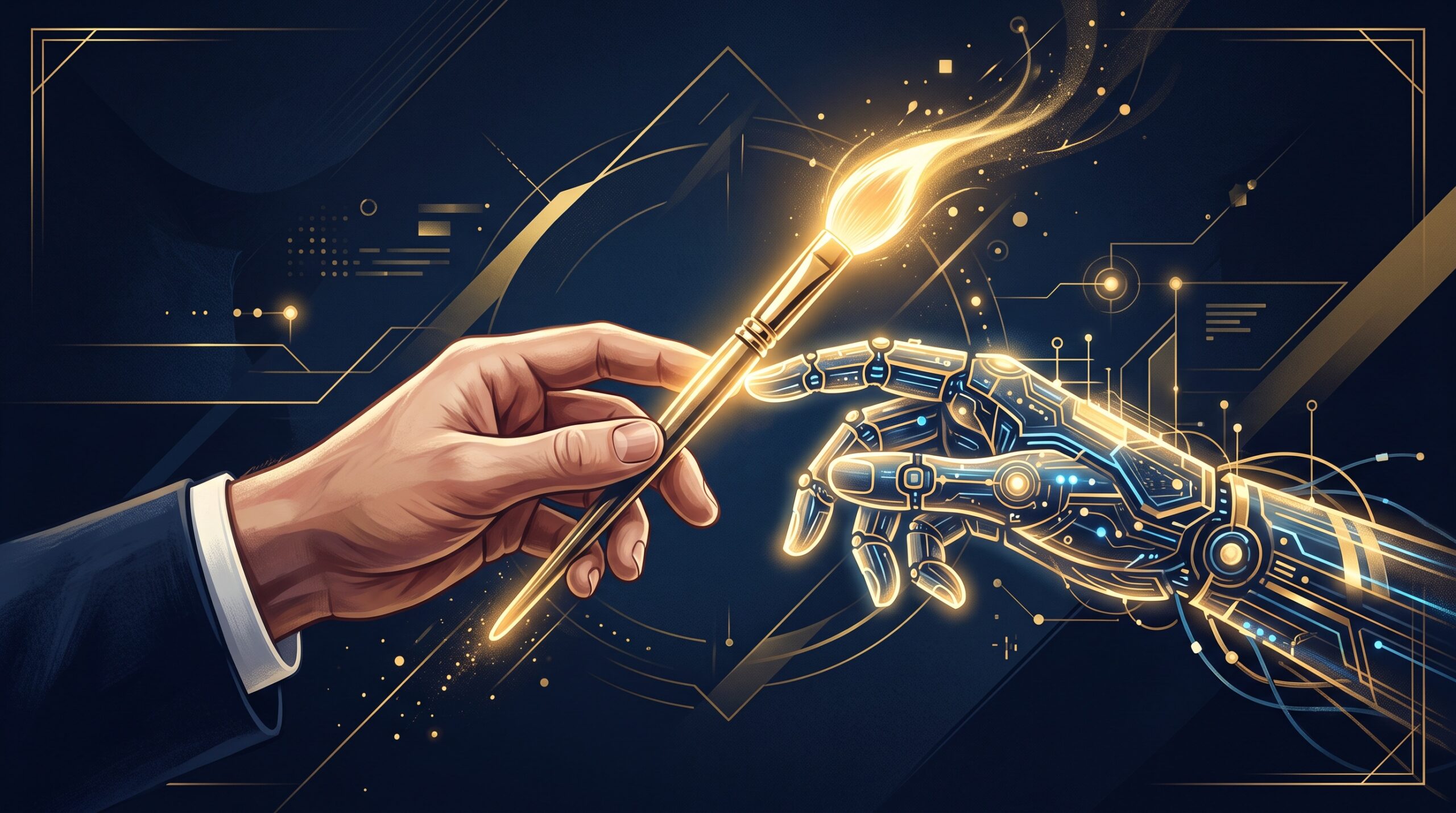
AI is a legitimate tool. Using it does not make you a thief, and it does not automatically strip you of rights. But if you want to own what you make, the law rewards the same thing it always has: your own creative judgment, visibly in the work. Treat AI as a brush, not the artist, and you stay on the right side of the line.
IPSurge explains intellectual property in plain language for creators and small businesses. This is general information, not legal advice — for a decision that carries real risk or money, talk to a licensed IP attorney.
Sources & further reading:
- U.S. Copyright Office — Copyright and Artificial Intelligence guidance
- Thaler v. Perlmutter (human-authorship requirement)