You’ve built something. You want to tell people about it, pitch it, maybe put it on Kickstarter — but you’ve heard that showing your invention to the world before you protect it can cost you your rights, and a real patent runs into the thousands. So you’re stuck between going public and going broke.
There’s a middle path, and it’s cheaper than almost anyone expects: the provisional patent application. For roughly the price of a nice dinner in government fees, it locks in an early filing date and lets you legally stamp “patent pending” on your product for a full year. This is the plain-English, budget-focused guide to what it actually does, what it costs, how to keep it cheap, and how to file one yourself — plus the one deadline that ruins it if you forget.

What “patent pending” actually means (and what it doesn’t)
Let’s clear up the biggest misconception first. “Patent pending” is not a patent. It’s a status: it means you have an application on file with the U.S. Patent and Trademark Office (USPTO) and nobody has examined or granted it yet. That’s it.
Track the cases yourself
Every current AI-copyright ruling — and the ones still being fought — lives in our AI Copyright Ruling Tracker. Filter by your creator type to see, in plain language, how each case affects your rights.
So what’s it good for? Two real things. First, it’s an honest public signal — to copycats, to investors, to retailers — that you’ve taken the first legal step and a patent may be coming. Second, and more importantly, it marks your place in line. The U.S. runs a first-to-file system, so the date your application lands matters enormously if someone else is chasing the same idea. What “patent pending” does not do is let you sue anyone or stop a competitor today. The enforcement power only arrives if and when an actual patent is granted. Think of the provisional as buying your spot in line cheaply, not as a weapon you can swing yet.
Why a provisional is the budget on-ramp
A provisional application is deliberately lightweight. Unlike a full (“non-provisional”) patent application, it is never examined, it never becomes a patent on its own, and it doesn’t require the formal, lawyer-drafted “claims” that make real patents so expensive. You file a description of your invention, pay a small fee, and the USPTO date-stamps it.

That stripped-down nature is exactly why it’s affordable. You’re not paying for examination, you’re not (necessarily) paying an attorney to craft airtight claims, and you’re buying 12 months of breathing room. During that year you can show the invention to manufacturers, run a crowdfunding campaign, pitch investors, and test whether the thing even sells — all while able to say “patent pending.” If the market says yes, you file the full application and claim your early date. If it says no, you’ve risked very little.
The real cost: it’s mostly about who you are
Here’s the part that surprises people. The USPTO’s basic filing fee for a provisional application is small — and how small depends on your “entity” status, which is just the agency’s way of asking how big you are.

There are three tiers. A large entity (big company) pays the full fee. A small entity — most individuals, small businesses under 500 employees, and nonprofits — pays roughly half. And a micro entity — a small-entity applicant who also meets an income limit (tied to a multiple of the median household income) and hasn’t filed more than a handful of prior U.S. applications — pays roughly a quarter of the full fee. For a qualifying solo inventor, the government filing fee for a provisional often lands in the neighborhood of well under a hundred dollars.
Two honest cautions. First, fee figures change, and the USPTO adjusts them periodically — so always confirm the current number on the official USPTO fee schedule rather than trusting a figure you read somewhere. Second, qualifying as a micro entity has specific rules; if you’re not sure you meet them, claim small-entity status instead, which still roughly halves the cost and has far looser requirements. Claiming a discount you don’t qualify for can cause real problems down the line.
What you can skip to keep it cheap — and what you can’t
The temptation on a budget is to make the provisional as bare as possible. Resist that instinct about one thing: the description. A provisional is cheap on fees and formalities, but its entire value rests on what it discloses. You only get the benefit of that early filing date for what you actually described. If your full application later claims a feature your provisional never mentioned, that feature doesn’t get the early date — and that gap is where DIY provisionals most often fail.
So spend your effort, not your money, here: write a thorough, specific description of how your invention works, in your own words. Include every variation and detail you can think of. Add drawings — even clear hand sketches or labeled diagrams count; they don’t have to be formal patent illustrations at the provisional stage. You can safely skip the formal claims, the slick drawings, and (for many simple inventions) the attorney. You cannot safely skip describing the invention fully. A rich, detailed provisional costs you nothing but time and protects far more than a thin one.
How to file one yourself, step by step
For a straightforward invention, filing a provisional is genuinely doable on your own:
1. Write the specification. Describe what the invention is, what problem it solves, and exactly how it works — thoroughly, with every variation you can imagine.
2. Add your drawings. Sketches or diagrams that illustrate the invention and its parts. Reference them in your description.
3. Fill out the provisional cover sheet. The USPTO provides the form; it identifies the application as provisional and lists you as the inventor.
4. Determine your entity status. Decide (carefully) whether you qualify as a micro or small entity, since that sets your fee.
5. File electronically through Patent Center. The USPTO’s online filing system walks you through uploading your documents and paying the fee by card. You’ll get a confirmation and a filing date — that date is the whole point.
From that moment, you are “patent pending.” Keep your confirmation and your application number somewhere safe; you’ll need them to convert later.
The 12-month clock: the one mistake that wipes it all out
This is the deadline that catches people, so burn it in: a provisional application lasts exactly 12 months, and it cannot be extended. To keep your early filing date, you must file a corresponding full (non-provisional) utility application within that year and properly claim the benefit of the provisional.
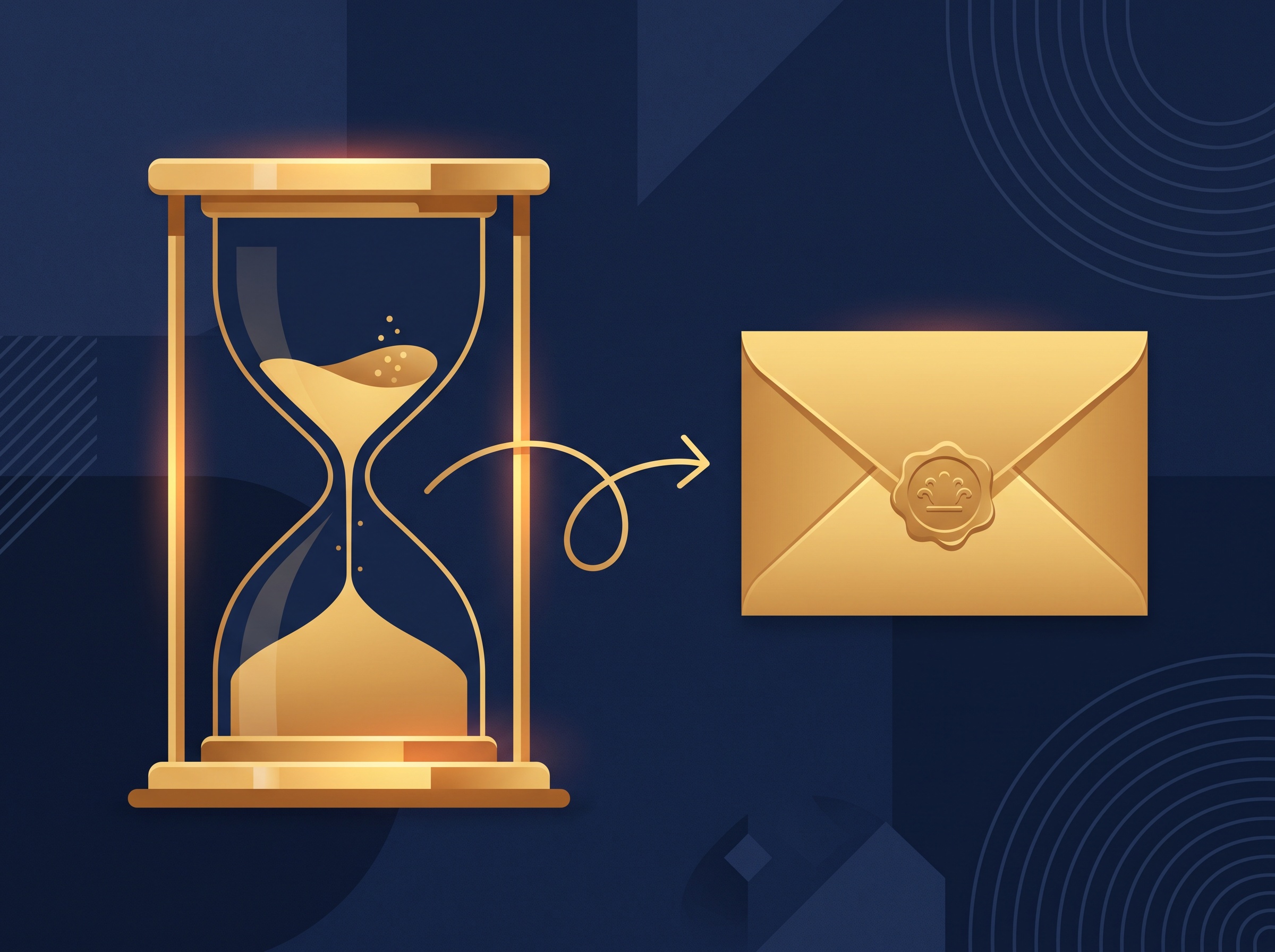
Miss the deadline and the provisional simply expires. It was never examined, it never turns into anything on its own, and your early date vanishes with it. Worse, if you spent that year publicly selling or disclosing the invention — which the provisional encouraged you to do — those disclosures may now count against you, potentially harming your ability to patent at all, especially outside the U.S. where grace periods are stingy or nonexistent. The provisional is a 12-month bridge, not a destination. Set a reminder the day you file, and treat the 10-month mark as your “decide and act” date so you’re not scrambling.
What this means for you
If you have an invention with real potential and a tight budget, a provisional patent application is often the smartest first move you can make: it’s cheap, you can frequently do it yourself, and it buys you a year of “patent pending” protection for your filing date while you figure out whether the idea is worth the full investment.
Here’s your plan. Do a quick prior-art search first (Google Patents is free) to make sure your idea isn’t already out there. Write the most detailed description of your invention you can, with sketches. Check the current USPTO fee schedule and your entity status. File through Patent Center and save your filing date. Then put a hard reminder on your calendar for 10 months out to decide whether to commit to the full application — and if the invention is genuinely valuable or complex, use some of that year to have a registered patent attorney or agent review your plan before the deadline. Spending a little to protect the early date is one of the best-value moves in the whole patent process; letting the clock run out on it is one of the worst.
This article is general information for inventors and makers, not legal advice. Provisional applications have real traps — incomplete disclosure, missed deadlines, and premature public disclosure chief among them — and the right strategy depends on your specific invention. For your situation, consult a registered patent attorney or agent.
IPSurge helps creators and small businesses understand and protect their intellectual property — the ideas, names, and work that make them unique.
Sources & further reading:
- Provisional application for patent — USPTO
- USPTO fee schedule — U.S. Patent and Trademark Office
- Micro entity status — USPTO
- General information concerning patents — USPTO
- Patent Center — file and manage patent applications — USPTO