You typed a prompt, hit generate, and there it was: a book cover more striking than anything you could have drawn yourself, ready in five minutes and costing almost nothing. For a self-publisher watching every dollar, an AI-generated cover feels like a gift. And it can be — as long as you understand what you’re actually getting.
Here’s the uncomfortable part: that cover may be beautiful, on-brand, and completely unprotectable. Under current U.S. law, an image an AI generates from your prompt likely carries no copyright at all. That doesn’t stop you from using it — but it does change what happens if someone copies it, and it creates a few traps that catch self-publishers off guard. Let’s walk through them.

Your text is protected. Your AI cover might not be.
Start with the good news. The manuscript — the actual writing inside your book — is human-authored, so it’s protected by copyright the moment you write it, and you can register it normally. Nothing about using an AI cover threatens the copyright in your words.
Track the cases yourself
Every current AI-copyright ruling — and the ones still being fought — lives in our AI Copyright Ruling Tracker. Filter by your creator type to see, in plain language, how each case affects your rights.
The cover is a different animal. A book cover is a separate piece of visual art, and the U.S. Copyright Office has been clear: it will only register material that a human created. Images generated by an AI system from a text prompt — where the machine decides how to translate your words into the actual picture — aren’t considered human authorship. The Office spelled this out in its 2023 guidance on AI-generated works, and it isn’t hypothetical.
In the well-known Zarya of the Dawn case, a creator registered a comic book that used Midjourney images. The Copyright Office let her keep protection for the parts she authored — the story text and the way she selected and arranged the panels — but cancelled protection for the individual AI-generated images themselves. Swap “comic panels” for “book cover” and you can see the trap: the picture on the front of your book may simply not be yours to protect.
Trap #1: You can’t stop anyone from reusing it
This is the consequence that surprises people most. If your cover art has no copyright, you have no copyright to enforce. That means:
- A competitor in your genre could take that exact image — or generate a near-identical one from a similar prompt — and slap it on their own book, and you’d have little copyright basis to make them stop.
- The same AI tool can hand a stranger an output almost indistinguishable from yours. These models aren’t producing one-of-a-kind results reserved for you.
- Stock-image sites and other authors may already be using visuals that look strikingly like “your” cover.
For a hobby project, maybe you shrug. But if your cover is doing real branding work — anchoring a series, building recognition for your author name — the inability to keep it exclusive is a genuine business risk, not a technicality.
Trap #2: The KDP disclosure question
Amazon’s Kindle Direct Publishing now asks, during setup, whether your book contains AI-generated content — and that includes cover art. KDP draws a line between two things:
- AI-generated content: created by an AI tool, whether or not you edited it afterward. If the AI made the image, this is you.
- AI-assisted content: you created it, and used AI tools to refine or improve your own work. KDP doesn’t require you to disclose this.
The trap is answering carelessly. Disclosing AI-generated content doesn’t get your book blocked — plenty of titles with AI covers are on sale right now. But a false declaration violates KDP’s terms, and content-guideline violations can put your publishing account at risk. Answer honestly, and understand which bucket your cover falls into. If the machine generated the picture, it’s “AI-generated,” even if you cropped it or tweaked the colors.
Trap #3: “But the tool said I own it”
Midjourney, OpenAI’s tools, and others often tell paying subscribers they “own” the images they generate. Authors read that and assume they’ve got copyright. They haven’t — not in the way they think.
Those statements are contract terms between you and the company. The tool is promising it won’t come after you for using the output commercially, and it’s assigning whatever rights it might have. That’s useful. But a company can’t hand you a copyright the law never created in the first place. If the image isn’t copyrightable because no human authored it, no terms-of-service language conjures one into existence. So “I own it per Midjourney’s terms” means “the tool won’t sue me” — not “I can stop the world from copying this.” Those are very different powers.
Trap #4: Registering your book the wrong way
When you register your book with the Copyright Office — a smart move, since registration is what lets you sue and claim stronger damages — you have to be truthful about authorship. If your cover is AI-generated, you’re expected to disclaim that material on the application: claim your human-authored text (and any human-made design elements), and exclude the AI-generated image.
Claiming an AI cover as your own human artwork isn’t a clever shortcut — it’s a misstatement, and a registration obtained with knowingly false information can be challenged or invalidated later, which is exactly when you least want a weak spot. Register what’s actually yours. For most self-publishers that’s the manuscript and the human-designed layout; the AI image gets carved out.
How to protect yourself (and still use AI)
None of this means “never touch AI covers.” It means using AI with your eyes open. A few practical moves:
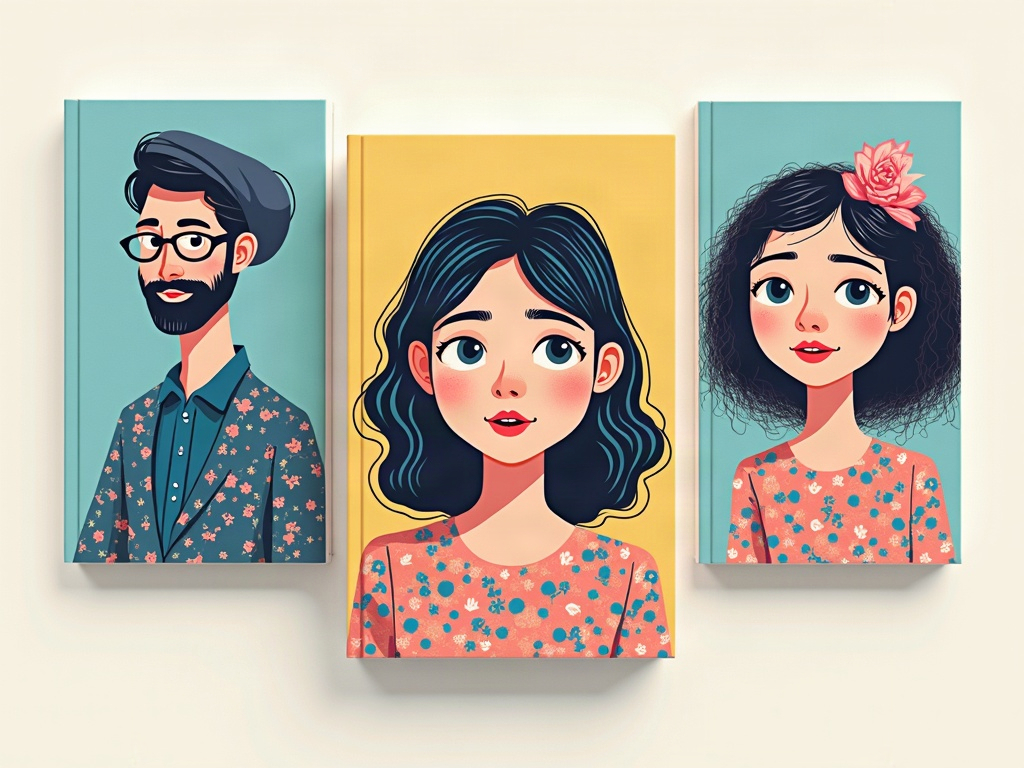
- Add real human authorship. The more meaningful creative work you put in — compositing multiple elements, significant hand-editing, adding original illustration or photography, designing the typography and layout — the more of the final cover can qualify as human-authored and protectable. A human-designed cover that merely incorporates an AI element is on far firmer ground than a raw one-prompt export.
- Hire or become the designer. If exclusivity matters to your brand, a human-made cover (or heavy human redesign) is the reliable path to a cover you can actually own and defend.
- Keep your provenance. Save prompts, tool versions, your editing files, and drafts. If you ever need to show which parts are human-authored, that record is gold.
- Disclose accurately on KDP and any other retailer that asks. It’s a checkbox, not a penalty — just tell the truth.
- Disclaim AI material when you register your book, and register the human-authored parts promptly (ideally within three months of publishing) to unlock the strongest remedies.
- Read the tool’s terms — especially the commercial-use conditions tied to your subscription tier. Free-tier outputs sometimes carry different usage rules than paid ones.
What this means for you
An AI-generated book cover is a legitimate, budget-friendly option — and for many indie authors it’s perfectly fine. Just go in knowing the trade-off: the picture is likely unprotectable, so you can use it, but you can’t fence it off. Your book’s text is still fully yours; the cover is the part that may be up for grabs.
If your cover is just a nice face for a standalone title, that’s probably an acceptable risk. If it’s the visual anchor of a brand you’re building, invest in genuine human authorship so you end up with a cover you can actually defend. Either way: disclose honestly on the retailer, disclaim the AI portions when you register, and don’t mistake a tool’s “you own it” for a copyright the law hasn’t granted.
This article is general information, not legal advice, and both platform policies and copyright rules around AI are evolving quickly — verify current details with copyright.gov and your publishing platform. For a specific dispute or a high-stakes title, consult an intellectual-property attorney.
Sources & further reading:
- U.S. Copyright Office – Copyright and Artificial Intelligence (registration guidance)
- U.S. Copyright Office – Registration Decision: Zarya of the Dawn (AI images in a comic not registrable)
- U.S. Copyright Office – Circular 40: Copyright Registration of Works of the Visual Arts
- Amazon KDP – Artificial Intelligence (AI) Content Guidelines