You’ve had the first call, the project sounds great, and then it lands in your inbox: a non-disclosure agreement to sign “before we get into the details.” For most freelancers, this is a routine, reasonable request – a client wants to talk openly about their unreleased product, their customer list, or their secret sauce without worrying it’ll end up on your Twitter. Signing is usually the right move.
But an NDA is still a binding legal contract, and a small share of them quietly ask for far more than confidentiality. Some try to lock up your future work, claim your independent ideas, or bury a non-compete in the fine print. The skill isn’t refusing to sign NDAs – it’s knowing which ones are normal and which ones deserve a hard no. Here’s how to tell them apart.

What an NDA actually does (and doesn’t do)
A non-disclosure agreement – also called a confidentiality agreement – is a contract where one or both parties promise to keep certain information secret and not use it for anything outside the project. That’s it. A clean NDA is narrow: it protects genuinely sensitive information, for a sensible amount of time, and doesn’t touch your ability to work.
Track the cases yourself
Every current AI-copyright ruling — and the ones still being fought — lives in our AI Copyright Ruling Tracker. Filter by your creator type to see, in plain language, how each case affects your rights.
Just as important is what an NDA is not. It is not an intellectual-property assignment – it doesn’t decide who owns the work you create. It’s not a work contract – it doesn’t set your pay, scope, or deadlines. And it’s not a non-compete – it shouldn’t stop you from taking similar clients. When any of those things start showing up inside a document labeled “NDA,” that’s your first signal to slow down and read carefully, because someone is using a routine-looking form to do non-routine things.
What this means for you: treat an NDA as a confidentiality promise and nothing more. If it reaches beyond that, either those clauses belong in a separate, clearly negotiated contract – or they don’t belong at all.
One-way vs. mutual: which direction does the protection flow?
NDAs come in two flavors. A unilateral (one-way) NDA protects only one side’s information – almost always the client’s. You promise to keep their secrets; they promise nothing about yours. A mutual (bilateral) NDA protects both parties, so anything you share – your process, your rates, your proprietary methods – is covered too.
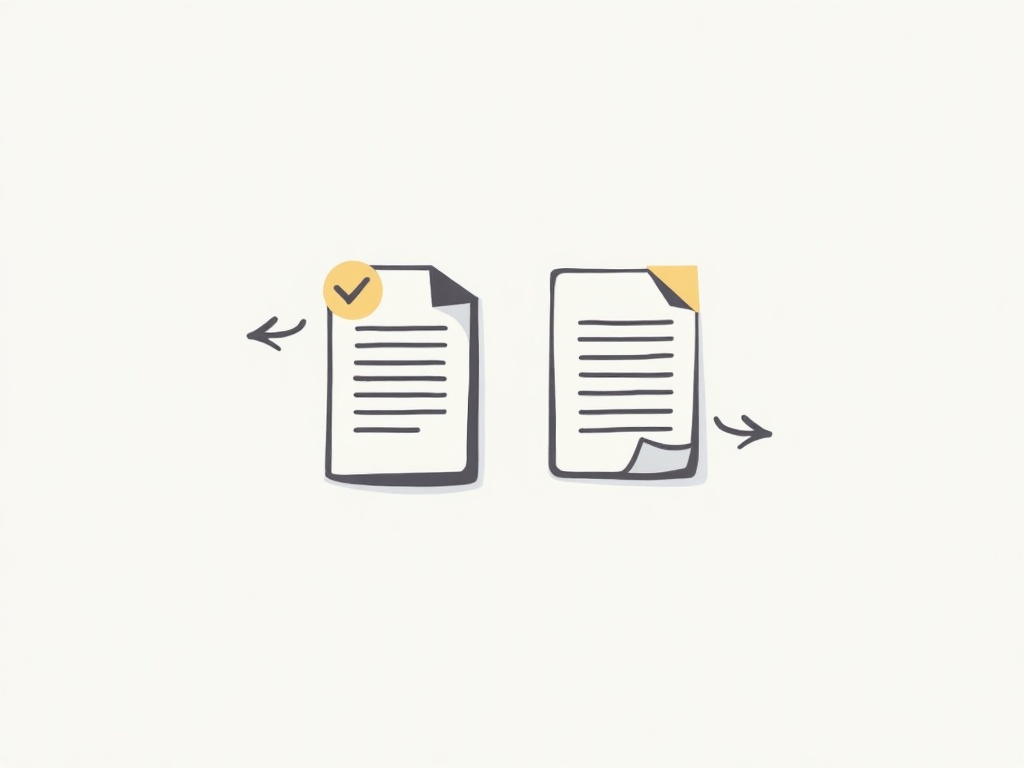
For a lot of freelance work, a one-way NDA is perfectly fair; the client simply has more secrets on the table than you do. But if you’ll be revealing your own trade secrets, tooling, or business information during the project, it’s completely reasonable to ask to make it mutual. A client who flatly refuses to protect your confidential information while demanding you protect theirs is telling you something about how the whole relationship will feel.
The clauses that actually matter
You don’t need to parse every line like a lawyer, but four sections deserve real attention because they decide how much of your life the agreement touches.
1. The definition of “confidential information.” This is the heart of the NDA. A good definition is specific – technical data, business plans, customer lists, unreleased features. A dangerous one is vague and sweeping: “any and all information disclosed, in any form.” Read broadly, that can cover things you already knew, things that are public, and ideas you bring yourself, making it nearly impossible to know what you’re even allowed to say.
2. The exclusions. Every fair NDA carves out categories that aren’t confidential: information that is already public, that you already knew before signing, that you independently develop without using their secrets, or that you lawfully receive from someone else. If these standard exclusions are missing, the NDA is over-reaching, full stop.
3. The term. How long does your obligation last? Two to five years is common and reasonable for ordinary business information. A perpetual, never-ending obligation is a red flag for most freelance work – it means you’re on the hook forever for information that may be public in a year.
4. Return or destruction. A sensible NDA says that when the project ends, you’ll return or delete the confidential materials. That’s normal. Just make sure it’s realistic and doesn’t, for example, demand you purge your own emails or business records.

Red flags: when to negotiate or walk away
Most NDAs are fine. These are the ones that should make you stop, push back, or decline entirely:
- A non-compete in disguise. Watch for language that stops you from working with competitors, in the same industry, or with “similar” clients. That’s not confidentiality – that’s a restraint on your livelihood, and it belongs nowhere near a standard NDA.
- Hidden IP assignment. Clauses saying the client owns “any ideas, concepts, or works” you create or conceive. An NDA should never quietly transfer ownership of your work. Ownership is a separate negotiation with its own price.
- Overbroad or perpetual scope. An everything-is-confidential definition with no exclusions and no end date. Individually annoying; together, a trap.
- One-sided penalties. Steep fixed “liquidated damages” for any breach, or a promise to cover the client’s legal fees no matter what, while you get no equivalent protection. Ask what a realistic, mutual remedy looks like instead.
- Inconvenient governing law. A clause forcing any dispute into a court on the other side of the country (or world). It may be minor – or it may make enforcing your own rights impractical.
- They won’t explain or negotiate. A client who treats a plain-language question as an insult, or refuses to change a single word of a clearly one-sided form, is showing you the whole partnership.
What this means for you: a red flag isn’t always a dealbreaker – it’s an invitation to negotiate. Most reasonable clients will happily narrow a definition, add exclusions, or cap a term. It’s the refusal to discuss any of it that tells you to walk.
A quick note on trade secrets and the DTSA
NDAs and trade-secret law are close cousins. Under the federal Defend Trade Secrets Act (DTSA) of 2016, an NDA or confidentiality agreement that governs the use of trade secrets is supposed to include a short whistleblower-immunity notice – a statement that you can’t be held liable for confidentially reporting a suspected legal violation to the government or in a court filing. It protects your right to report genuine wrongdoing, and it applies to independent contractors, not just employees.
You don’t need to memorize the statute, but seeing that notice is a small green flag: it signals the agreement was drafted by someone who knows the current rules. Its absence isn’t fatal – but an NDA that tries to stop you from reporting anything to anyone, ever, is drafting you into territory the law specifically forbids.
How to handle an NDA like a pro
When one lands in your inbox, a calm, repeatable process beats either rubber-stamping it or panicking:
- Read it once, all the way through – especially the definition, exclusions, term, and any clause mentioning “ownership,” “compete,” or “solicit.”
- Flag anything beyond confidentiality. IP, non-competes, and payment terms should live in your main services agreement, not smuggled into the NDA.
- Ask for reasonable changes in plain English – a defined term, standard exclusions, mutual protection if you’re sharing secrets too. This is normal and expected, not rude.
- Keep a signed copy and a simple record of what confidential materials you received, so you can actually meet the return-or-delete obligation later.
- For a high-stakes or unusually aggressive NDA, spend an hour with an attorney before signing. It’s cheap insurance against a clause that outlives the project.
Signing NDAs is just part of professional freelance life, and the vast majority are fair, forgettable, and worth a signature. The point isn’t to fear them – it’s to read the few lines that matter, recognize when a “confidentiality” form is trying to be something bigger, and negotiate or decline without flinching. That confidence protects the two things that keep your business alive: your reputation, and your freedom to keep working.
This article is general information for freelancers, creators, and small-business owners, not legal advice. NDA enforceability and the treatment of non-competes and confidentiality terms vary by state and by the specific wording, so for any agreement that carries real risk, a licensed attorney is well worth the consult.
IPSurge helps creators and small businesses understand and protect their intellectual property – the ideas, names, and work that make them unique.
Sources & further reading:
- USPTO – Trade secret policy
- Defend Trade Secrets Act of 2016 (Public Law 114-153)
- 18 U.S.C. Sec. 1833 – Immunity from liability for confidential disclosure of a trade secret
- WIPO – Trade secrets