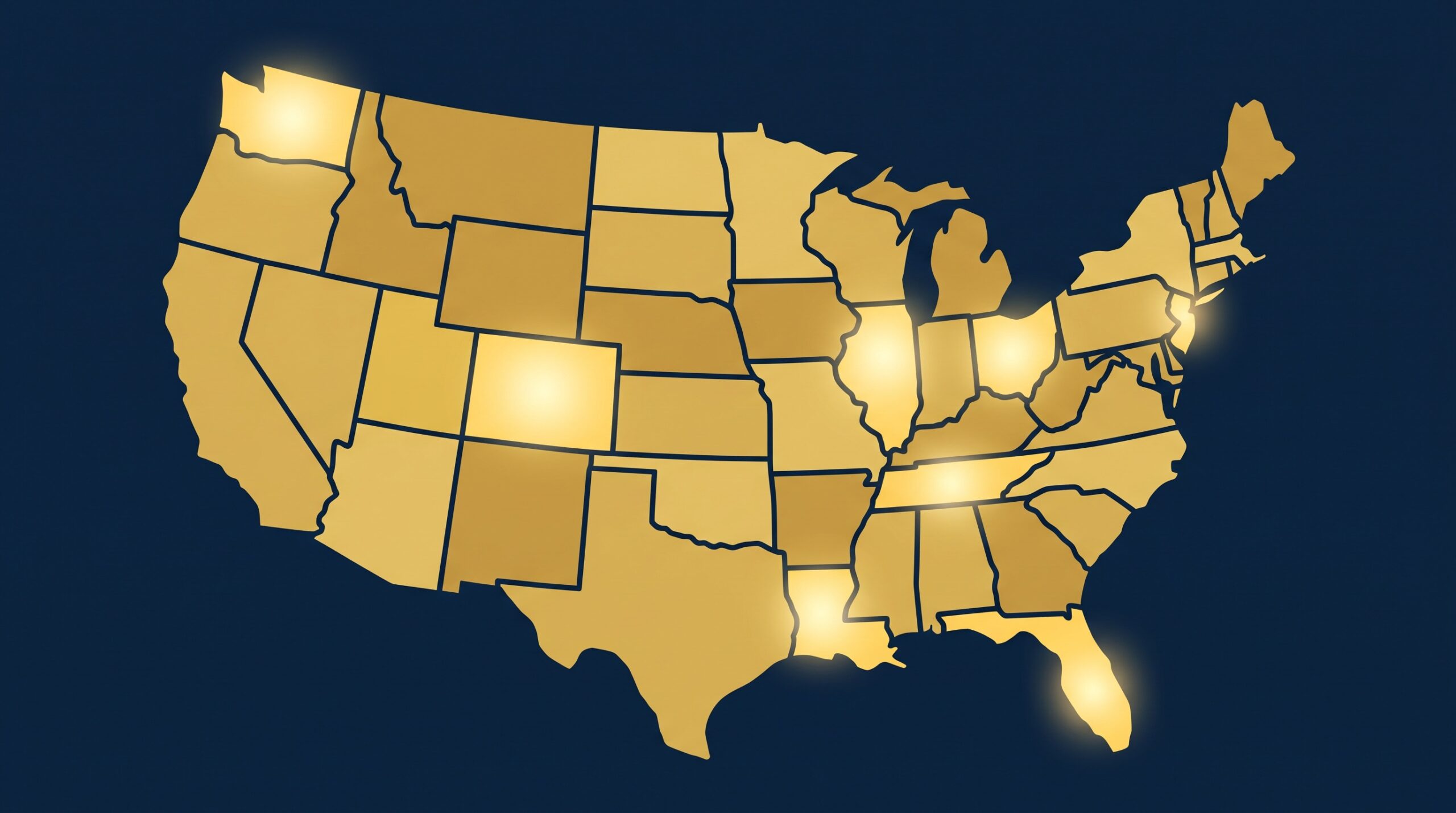
If someone spins up an AI clone of your face or voice, the first question isn’t “is that legal?” – it’s “legal where?” In the United States there is still no single, comprehensive federal law covering AI deepfakes of a person’s likeness. Instead there’s a fast-growing patchwork of state statutes, and whether you’re protected can depend on which state you’re in, which state the person who targeted you is in, and exactly what they did with the fake.
That sounds messy because it is. But the picture is more navigable than it looks once you sort the laws into a few buckets. Here’s the 2026 lay of the land for creators – what exists, what it covers, and what it means for you. (“IP” here means intellectual property. This is general information, not legal advice.)
Why it’s a state patchwork (and not one federal rule)
Two areas of law are doing the heavy lifting here, and both have historically been state matters. The first is the right of publicity – your right to control the commercial use of your name, image, and voice – which has never had a single federal statute and varies wildly from state to state. The second is criminal law around harassment and intimate-image abuse, which states write for themselves.
Track the cases yourself
Every current AI-copyright ruling — and the ones still being fought — lives in our AI Copyright Ruling Tracker. Filter by your creator type to see, in plain language, how each case affects your rights.
Congress has taken exactly one real bite so far. The TAKE IT DOWN Act, signed in May 2025, is the first federal law to directly target nonconsensual intimate imagery – including AI-generated deepfakes. It criminalizes sharing this material and requires online platforms to remove it, quickly, once a valid request comes in (with the platform-removal duties phasing in through 2026). It’s a real national baseline, but a narrow one: it’s about intimate images, not the broader problem of someone faking your voice for an ad or your face for a political clip.
The broader fix – the proposed NO FAKES Act, which would create a federal right over your voice and likeness against unauthorized AI replicas – advanced through the Senate Judiciary Committee in mid-2026 but is not law yet. Notably, its drafters have said it wouldn’t wipe out stronger state laws like Tennessee’s. So for now, the state patchwork is the main event.
The four buckets of state law
Almost every state law you’ll run into falls into one of four categories. Knowing which bucket your situation lands in tells you which statute to look for.
Bucket 1: Intimate-image deepfakes (NCII)
This is the most widespread category by far. As of 2026, the large majority of states – by most trackers, at least 45 – have laws addressing nonconsensual intimate imagery, and many have been updated to explicitly cover AI-generated or “digitally altered” content. That means a sexually explicit deepfake of a real person, made without consent, is now illegal in most of the country under state law, on top of the federal TAKE IT DOWN Act.
For creators, this is the fastest-moving and most protective corner of the map. Remedies vary – some states offer criminal charges, some offer civil lawsuits, many offer both – but the direction is unmistakable: nonconsensual intimate deepfakes are treated as serious harm almost everywhere.
Bucket 2: Election and political deepfakes
The second big bucket targets synthetic media in elections – fake audio or video of a candidate, or misleading AI content near an election. More than 20 states have passed some form of election-deepfake law, and Public Citizen maintains a running tracker of them. The details differ a lot: some states ban deceptive political deepfakes outright within a window before an election, while others simply require a clear disclosure label that the content is AI-generated.
If you make political commentary, satire, or campaign content, this bucket matters to you directly. Many of these laws carve out parody and satire, but the safe move is the honest one: label AI-generated or AI-altered political media so you’re clearly on the disclosure side of the line rather than the deception side.
Bucket 3: Voice and likeness – the “digital replica” laws
This is the bucket creators tend to care about most, because it’s about your professional identity – your face, your voice, your persona – being cloned and used without permission. Here a handful of states have moved aggressively.
Tennessee’s ELVIS Act (the Ensuring Likeness Voice and Image Security Act, effective in 2024) is the headliner. It updated the state’s right-of-publicity law to explicitly protect a person’s voice – including a simulated or AI-generated imitation – “regardless of whether the sound contains the actual voice or a simulation.” In plain terms: a convincing AI clone of your voice is treated as legally yours to control, even though it’s synthetic. That’s a big deal for musicians, voice actors, narrators, and anyone whose sound is part of their brand. We break the law down in our guide to AI voice-cloning laws.
California has layered on several statutes: rules requiring specific, informed consent before a performer’s AI “digital replica” can be used in a contract, protection against nonconsensual sexual deepfakes, and amendments extending its right-of-publicity law to AI replicas of deceased performers. New York, Illinois, and Texas have introduced or strengthened related measures as well. Legal scholars increasingly call this whole category “digital replica” law – and it’s the front line of the fight over AI and identity.
Bucket 4: Protection after death (postmortem rights)
One quirk of right-of-publicity law that surprises people: in many states these rights survive death, so an estate can object to an unauthorized AI resurrection of a late performer. California, New York (which protects deceased performers for 40 years), Indiana, Nevada, and Tennessee all provide some postmortem coverage, though the length and scope differ by state. If your work involves recreating or referencing real people who have passed, this bucket is the one to check before you publish.
What this means for you
You don’t need to memorize 50 statutes. You need to know how to figure out which ones reach your situation, and what to do when they do. Here’s the creator’s routine:
- Start with “where and what.” Which state are you in, which state is the person who targeted you in, and which bucket does the harm fall into – intimate image, election, voice/likeness, or a deceased person? That combination points you to the right law far faster than a generic search.
- Assume the intimate-image bucket is covered almost everywhere. Between the federal TAKE IT DOWN Act and near-universal state NCII laws, a nonconsensual sexual deepfake is illegal in most of the country – and platforms now face removal deadlines. Report it and demand takedown.
- Preserve evidence before it disappears. Screenshot the content, the URL, the account, and the dates. Deepfakes get deleted and re-uploaded; your case is only as strong as what you saved.
- Use a live tracker, not your memory. These laws are changing every legislative session. Public Citizen’s election-deepfake tracker and state-by-state legal trackers are better than any static list, including this one.
- Layer your other protections. State deepfake law sits alongside your copyright, your right of publicity, and platform rules. When your face or voice is misused, you often have more than one lever – see our overview of deepfake likeness rights and the pending federal NO FAKES Act.
The honest summary of 2026 is this: the U.S. is building deepfake and likeness protection one state at a time, and the map is uneven. Intimate-image abuse is covered nearly everywhere; election deepfakes are covered in a growing minority of states; and the voice-and-likeness “digital replica” laws – the ones that matter most to working creators – are strong in a few states and absent in many. Until a federal law fills the gaps, your best defense is knowing which bucket you’re in, where you stand geographically, and how to move fast when someone clones the one thing you can’t replace: you.
This article is general information about intellectual property, not legal advice. Deepfake and likeness laws vary significantly by state and are changing rapidly – if a real dispute or business decision is on the line, check a current tracker and talk to a qualified attorney licensed in the relevant state.
Sources & further reading:
- Recording Law – Deepfake & AI Voice Cloning Laws by State (2026)
- Public Citizen – Tracker: State Legislation on Deepfakes in Elections
- Wikipedia – TAKE IT DOWN Act (federal NCII law, signed May 2025)
- Reed Smith – Tennessee ELVIS Act and right of publicity against GenAI
- Holland & Knight – Senate Committee Advances the NO FAKES Act
- Vermont Law Review – State Digital Replica Laws, the First Amendment, and Federal Regulation
- Proskauer – The ELVIS Act, Generative AI and the Right of Publicity