You came up with the perfect line. A three-word slogan that sums up your whole brand, or a hashtag your fans already type without thinking, or a catchphrase you say at the end of every video. Naturally, you want to lock it down so nobody else can grab it. So can you trademark a hashtag, a slogan, or a catchphrase?
The honest answer is: sometimes. Not because the law is picky about the type of phrase, but because a trademark isn’t really about the words at all – it’s about the job the words do. Once you understand that one idea, the whole thing gets a lot clearer.

The short answer: yes, if it does one specific job
A trademark is anything that tells customers who made this. The swoosh tells you Nike. The words “Just Do It” tell you Nike too – which is exactly why that slogan is a registered trademark. The phrase earns protection because, in people’s minds, it points back to a single source.
Track the cases yourself
Every current AI-copyright ruling — and the ones still being fought — lives in our AI Copyright Ruling Tracker. Filter by your creator type to see, in plain language, how each case affects your rights.
So slogans, taglines, hashtags, and catchphrases are all eligible to be trademarks. There’s no rule that says “phrases don’t count” or “hashtags aren’t allowed.” What matters is whether your particular phrase actually functions as a brand identifier when customers see it – or whether it just reads as a nice sentence, a decoration, or something everyone already says.
What “functions as a trademark” actually means
This is the whole ballgame, so it’s worth slowing down. When the U.S. Patent and Trademark Office (USPTO) reviews a phrase, the key question is: when a customer encounters this on your product, do they perceive it as identifying the source of the product, or as something else?
Two things have to be true:
- You have to actually use it in commerce. You can’t trademark a phrase in the abstract and sit on it. A trademark is tied to specific goods or services – “t-shirts,” “a podcast,” “skincare products.” The phrase has to be doing brand work on real things you sell.
- It has to be perceived as a brand, not as ordinary decoration or a common message. This is where most applications live or die, and it’s the source of the two traps we’ll get to below.
Notice what’s not on the list: cleverness, originality, or being first to say it. A phrase can be totally original and still get rejected because customers don’t read it as a brand. And a phrase can be simple and still register because customers clearly do.
Slogans: protectable, until they’re just words on a shirt
Slogans and taglines are the friendliest category here. Plenty are registered – short, punchy lines that a company uses consistently next to its name until the public connects the two. If you use your tagline the way a brand uses a tagline (on your packaging, near your logo, in your marketing, on your website header), you’re on solid ground.
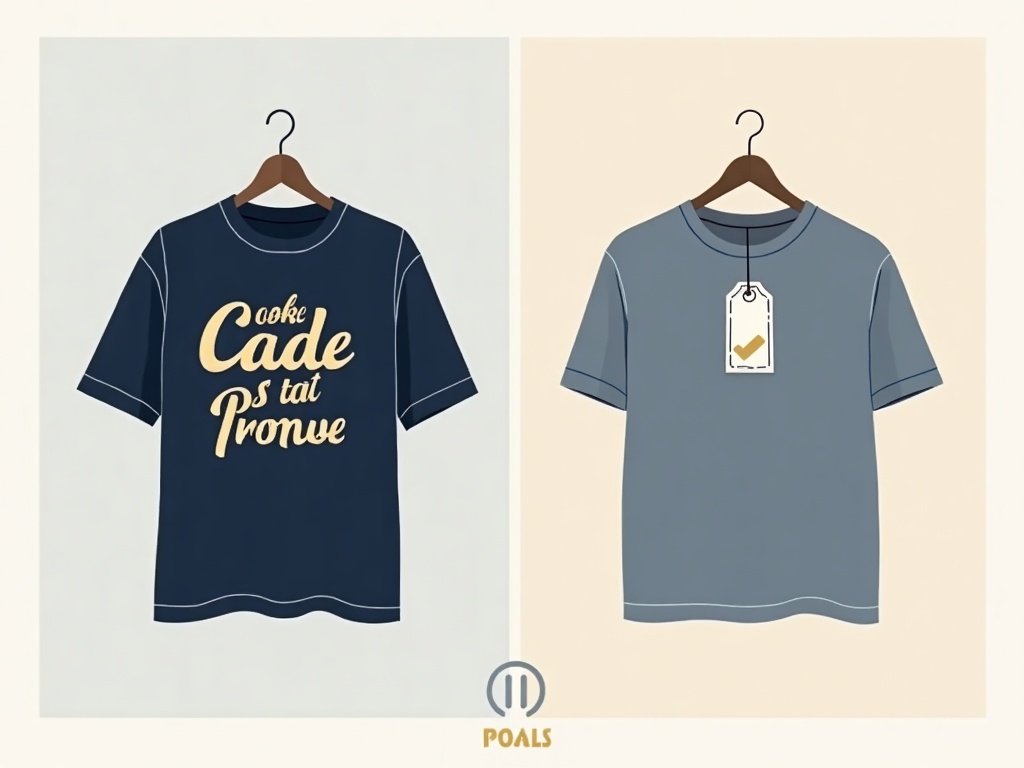
The classic failure is a slogan that only ever appears as decoration. Print “LIVE LAUGH CREATE” in giant letters across the front of a t-shirt and nothing else, and the USPTO will likely say customers see that as the design of the shirt – the reason they bought it – not as a badge telling them who made it. Same words, different job. We’ll come back to this trap because it catches a lot of creators selling merch.
Hashtags: the # doesn’t do anything magic
Hashtags feel special because of the symbol, but legally the hash mark is close to invisible. USPTO guidance (TMEP §1202.18) treats a hashtag mark as registrable only if the wording functions as a source identifier – and the “#” or the word “hashtag” generally adds no source-identifying meaning on its own. In other words, the examiner mentally strips the # off and looks at the words.
So #YourBrandName can be protectable to the same extent your brand name is. But a hashtag made of generic or descriptive words – the kind of tag anyone in your niche would use to join a conversation – usually isn’t, because customers read it as a topic label, not as your brand. If the words wouldn’t be a trademark without the #, adding the # won’t rescue them.
One more practical note: registering a hashtag as a trademark does not give you control over the hashtag on social media. It protects your use of the mark on your goods and services against confusingly similar brand use – it doesn’t stop the public from typing the tag.
Catchphrases: the famous-line trap
Catchphrases are trickier because so many of the good ones are already spoken for. If a phrase is famous from a TV show, movie, athlete, or celebrity, the studio, league, or person may already have rights to it – or a strong claim to it – and merely quoting it doesn’t hand you any ownership. Slapping a beloved TV catchphrase on your mugs is a fast route to a cease-and-desist, not a trademark.
Your own catchphrase is different. If you say it consistently and it becomes associated with your channel or business, it can grow into a protectable mark – the same way a slogan does. The bar is the same: it has to point to you as the source, and you have to use it on actual goods or services, not just say it.
The two traps that sink most applications
Almost every phrase rejection comes down to one of these two:
- Ornamental refusal. The phrase is used purely as decoration – a big graphic across a shirt, tote, or poster – so it’s seen as the product’s design, not a brand. The fix is to also use it as a real mark: smaller, near your logo, on tags, labels, and packaging, so it clearly signals source.
- Merely informational / failure to function. The phrase is a common, everyday message that the public is used to seeing from many sources – think generic encouragement, well-worn expressions, or a widely used social message. The USPTO calls this a “failure to function,” because no matter how you use it, customers won’t read it as one brand’s identifier. Widely-used phrases are the hardest to register, precisely because they belong to everyone.
If your phrase is genuinely distinctive to your brand and you use it like a brand, you clear both gates. If it’s a common saying plastered across merch, you’ll likely trip on both.

What this means for you – and your next steps
If you’ve got a slogan, hashtag, or catchphrase worth protecting, here’s how to give it the best shot:
- Use it like a brand, not a graphic. Put it near your logo, on hangtags, packaging, your site header, and your profiles – consistently. Consistent brand use is what turns a phrase into a mark in customers’ minds.
- Don’t rely on the big-chest print alone. If you sell merch, that giant front print can be your design, but make sure the same phrase also appears as a genuine source identifier somewhere (tag, label, packaging).
- Search before you fall in love. Check the USPTO database and the open web to make sure someone else isn’t already using it for similar goods. A trademark search up front saves a painful rejection – or a legal letter – later.
- Pick the right goods and services. A trademark protects the phrase for what you actually sell. Be specific and honest about that.
- Skip the famous lines. If a phrase is already tied to a show, star, or big brand, invent your own instead. It’s cheaper than a dispute.
The mindset shift is simple: stop asking “is this phrase original enough to own?” and start asking “does this phrase clearly tell my customers it’s me?” That’s the question the trademark system is actually answering.
This article is general information for creators and small businesses, not legal advice. Trademark decisions turn on specifics – your exact phrase, how you use it, and your goods or services – so for a real application or dispute, it’s worth a quick consult with a trademark attorney.
IPSurge helps creators and small businesses understand and protect their intellectual property – the ideas, names, and work that make them unique.
Sources & further reading:
- USPTO TMEP §1202.18 – Hashtag Marks
- USPTO – Ornamental refusal (mark that is merely decorative)
- USPTO – Merely informational matter / failure to function