If AI Copies My Style, Can I Sue? Style vs. Expression
AI can copy your look in seconds – but ‘style’ and ‘a copy’ are two different things in the eyes of the law. Here’s where the line sits and what you can actually do.
AI can copy your look in seconds – but ‘style’ and ‘a copy’ are two different things in the eyes of the law. Here’s where the line sits and what you can actually do.

Your art is protected the moment you make it – but registering it unlocks the parts that actually let you fight back. Here’s how to do it, step by step.
That gorgeous AI cover you generated in five minutes could leave you unable to stop a competitor from using the exact same image. Here are the traps – and how to publish safely.
Turning your selfie into a Ghibli scene is one thing. Selling it is another. Copyright doesn’t protect an art style – but Totoro, the Ghibli name, and unprotectable AI output all change the math. Here’s the honest breakdown.

Someone typed a prompt and got something that looks unmistakably like your logo, your product, or your business name. Do you have any recourse? Yes – but it’s trademark law, not copyright, that does the heavy lifting. Here’s the honest breakdown and your action plan.
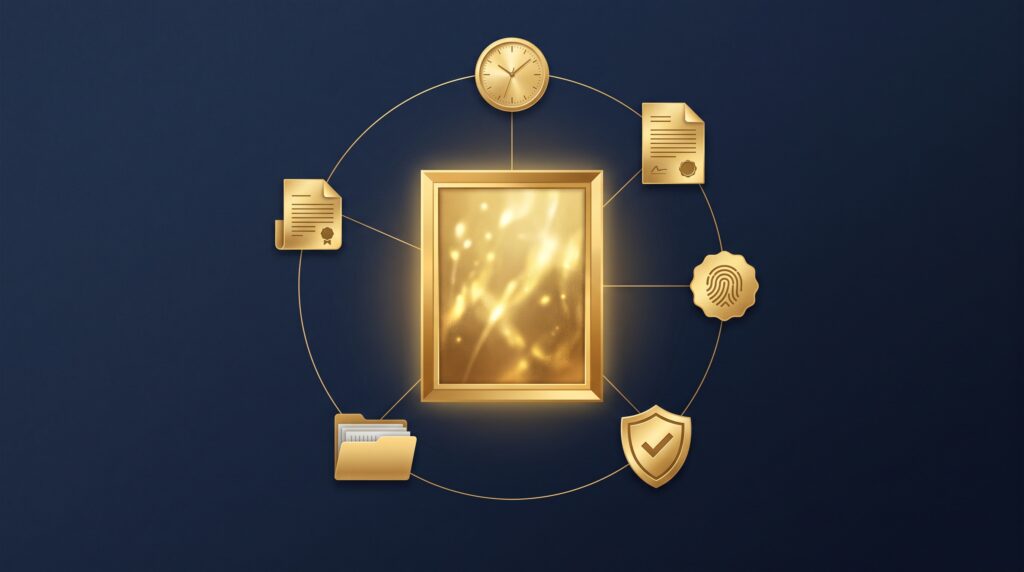
In an AI world, the person who can prove they made it first wins the argument. Here’s how to build a provenance trail that actually holds up – and the one popular trick that doesn’t.
The right to sell an AI image doesn’t come from copyright — it comes from the tool’s license. And ‘commercial use’ in that license is a defined term with subscription tiers, revenue caps, and indemnification fine print. Here’s what it really means.