At the peak of the craze, people spent the price of a house on a JPEG of a cartoon ape. The obvious question — then and now — is: what did they actually buy? Not “was it a good investment,” but the plainer, more useful question: when the transaction cleared, what did the buyer legally own?
The answer surprises almost everyone, and it’s the single most important thing to understand before you buy or mint one. Owning an NFT, owning the artwork, and owning the copyright to that artwork are three different things — and buying the token usually gives you only the first. Let’s untangle exactly what transfers, what doesn’t, and what that means whether you’re a collector or a creator.
What an NFT Actually Is: a Token That Points to the Art
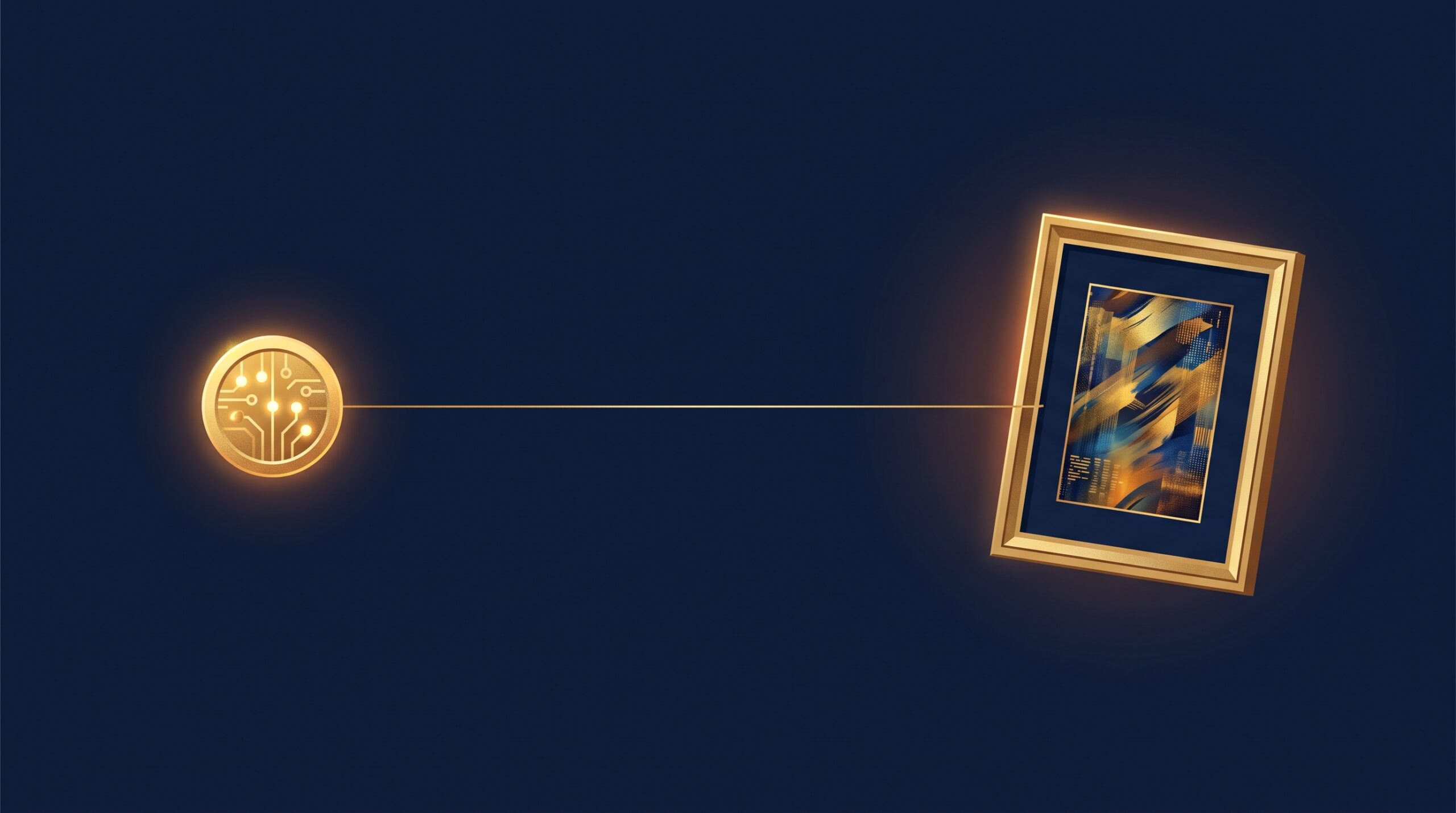
Strip away the hype and an NFT (non-fungible token) is a unique entry on a blockchain — a tamper-resistant record that says “this token exists, and this wallet holds it.” Crucially, the image itself usually isn’t stored on the chain. The token typically contains a link or reference to where the artwork lives (often an ordinary web server or a distributed file system).
Track the cases yourself
Every current AI-copyright ruling — and the ones still being fought — lives in our AI Copyright Ruling Tracker. Filter by your creator type to see, in plain language, how each case affects your rights.
So when you buy an NFT, you’re buying that token — a verifiable claim to a specific entry on a ledger. You are not automatically buying the file, the copyright, or any exclusive right to the art it points to. The token is more like a receipt or a numbered certificate than a deed to the underlying creative work. That gap between “I own the token” and “I own the art” is where nearly every NFT copyright misunderstanding begins.
The Rule Almost Nobody Expects: Copyright Stays With the Creator
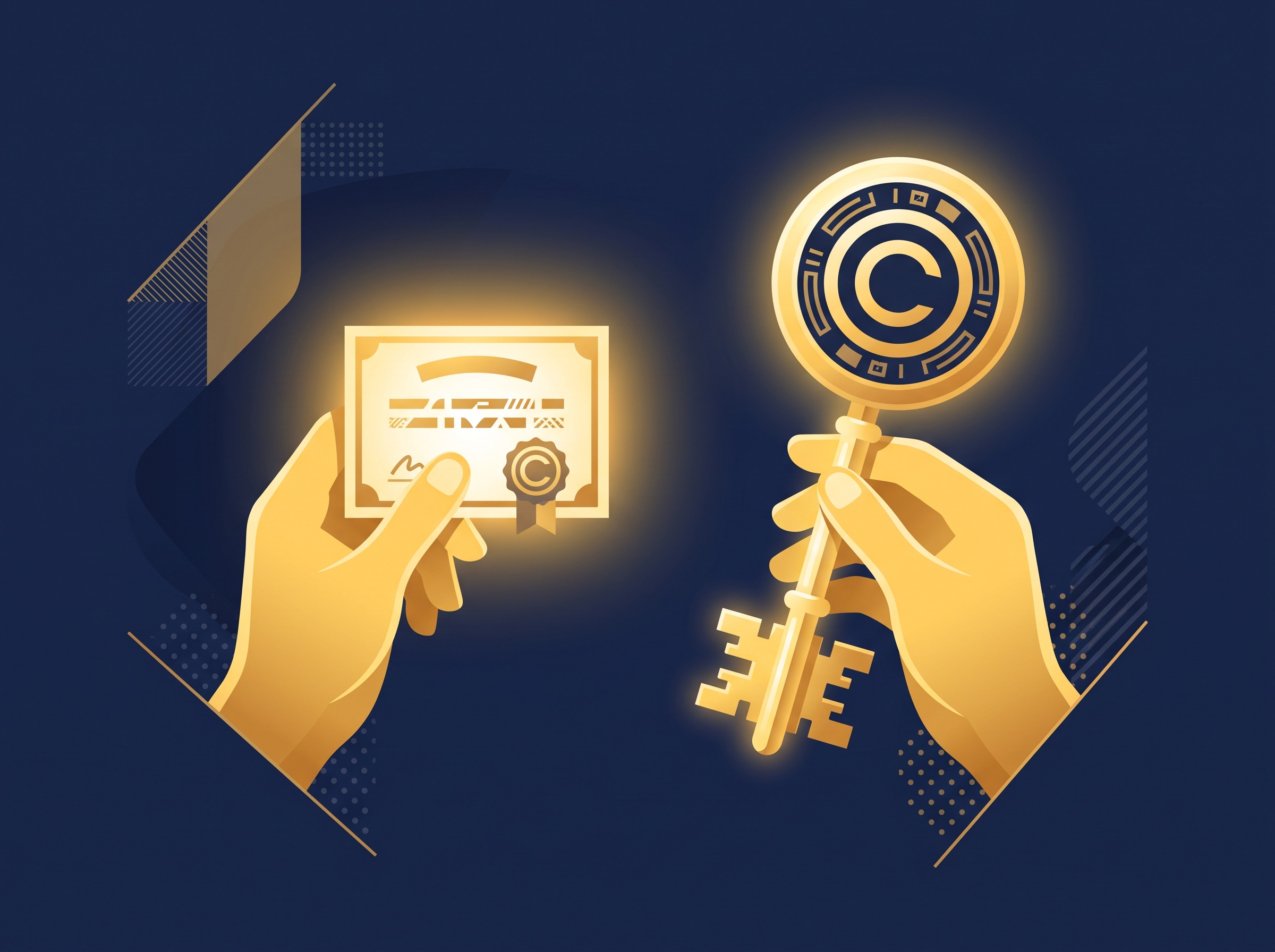
Here’s the legal bedrock, and it isn’t unique to NFTs at all. U.S. copyright law draws a sharp line between owning a copy of a work and owning the copyright in that work. Buying the object — a painting, a print, a book, or in this case a token pointing at a file — does not transfer the copyright. The Copyright Act spells this out directly: transferring ownership of a material object doesn’t transfer any rights in the copyrighted work itself.
Copyright is the bundle of exclusive rights the creator holds automatically the moment they make an original work: the right to reproduce it, distribute it, display it publicly, and make new works based on it (derivatives). By default, those rights stay with the artist even after they sell you the NFT. Unless the copyright is transferred in a signed, written agreement, the creator keeps it — and “I bought the NFT” is not that agreement.
This is the same principle that governs any art purchase: buy an original painting and you own that canvas, but you can’t legally mass-produce posters of it. The NFT just makes the confusion louder, because the whole thing feels digital and total, as if you downloaded the rights along with the picture. You didn’t.
So What Can You Actually Do With It? Read the License
If buying the token doesn’t hand you the copyright, what are you allowed to do with the art? The answer comes from the license terms the project attaches to the sale — a contract, separate from copyright law, that spells out the permissions you get. And those terms vary wildly from project to project:
- Personal-use only. Many collections grant buyers just the right to display and show off the art for non-commercial purposes. You can set it as your avatar; you can’t put it on merch and sell it.
- Broad commercial licenses. Some famous projects deliberately gave holders wide rights to use their specific NFT commercially — on products, in branding, even to build businesses around the character. That was a license the creators chose to grant, not something buying a token automatically confers.
- Public-domain / CC0. A few projects release the underlying art into the public domain, letting anyone — holder or not — use it freely. Here “ownership” of the token gives you no exclusive rights at all, because everyone has them.
The practical lesson: your rights come from the written terms, not from the blockchain. Before buying, find the project’s license (often on its site or in the terms of sale) and read exactly what it lets you do. Two NFTs that look identically “owned” can carry completely different rights.
Minting an NFT: What It Does and Doesn’t Do to Your Rights
Now flip to the creator’s side. If you mint an NFT of your own artwork, here’s the good news and the limit of it.
The good news: minting doesn’t cost you your copyright. You made the work, so you already hold the exclusive rights, and turning it into an NFT doesn’t sign them away. The blockchain record can even serve as useful provenance — a timestamped trail of who minted and sold what, which pairs well with other proof-of-authorship tools we cover in our guide on proving you made it first.
The limit: minting an NFT is not the same as registering a copyright. The blockchain records a transaction; it doesn’t grant legal rights, adjudicate who’s the true author, or replace formal copyright registration — which in the U.S. is what unlocks the strongest enforcement tools, like statutory damages. A token proves a sale happened. It doesn’t prove you’re the rightful copyright owner, and it won’t stop a determined infringer on its own. Mint if you like the provenance and the market, but don’t mistake it for legal protection you haven’t actually secured.
The Big Trap: Minting Someone Else’s Work
This is where creators get themselves sued. Because minting is so easy, people mint art they don’t own — someone else’s illustration, a screenshot, a photo, a character — and list it for sale. That’s copyright infringement, plain and simple. Making the token, displaying the work, and distributing copies of it all touch the real owner’s exclusive rights, and putting it on a blockchain doesn’t launder any of that. If anything, it creates a permanent, public, timestamped record of exactly what you did and when.
Marketplaces field a steady stream of takedown complaints from artists who found their work minted and sold by strangers. And it’s not only copyright at risk: minting art built around someone’s brand, logo, or characters can trigger separate trademark claims — the kind of dispute that produced high-profile lawsuits over branded digital collectibles. The rule is simple and unforgiving: only mint what you actually created or have clear written rights to.
Royalties on the Blockchain Aren’t Copyright Royalties
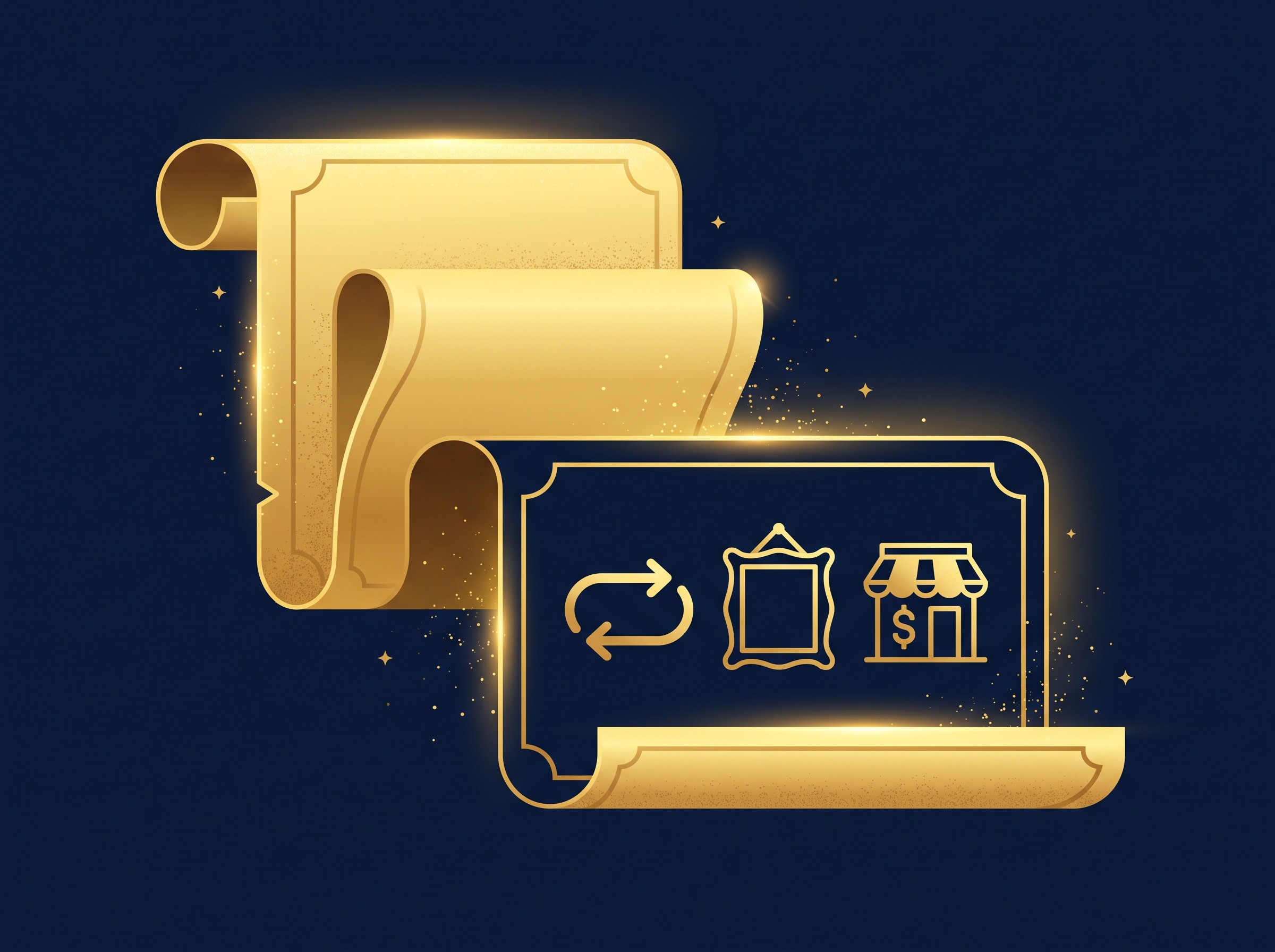
One more piece people conflate. Many NFTs are set up so the original minter earns a percentage each time the token is resold — a resale royalty coded into the smart contract or enforced by a marketplace. It’s a genuinely useful idea, and it’s often the selling point for creators.
But understand what it is: a contractual/technical payment tied to token resales, not a copyright royalty flowing from your exclusive rights. It only works where the marketplace or contract enforces it — and the industry has already shown these royalties can be bypassed or made optional when platforms decide not to honor them. That’s a very different footing from copyright, which the law protects regardless of any single platform’s policy. Enjoy the resale royalty when it pays out, but don’t build your livelihood on the assumption that it’s guaranteed the way your actual copyright is.
What This Means for You
Whether you’re collecting or creating, the fog clears once you separate the three layers — token, object, copyright. The practical playbook:
- Buyers: you’re buying the token, not the copyright. Assume the artist keeps all exclusive rights unless a signed agreement says otherwise.
- Read the license before you buy. Personal-use, broad-commercial, and public-domain projects give you wildly different rights. The written terms — not the blockchain — decide what you can do.
- Creators: minting doesn’t cost you your copyright, but it isn’t registration either. Register the work with the copyright office if you want real enforcement muscle.
- Only mint what’s yours. Minting someone else’s art or brand is infringement with a permanent public record attached. Don’t.
- Treat resale royalties as a bonus, not a right. They depend on contracts and platforms that can change; your copyright doesn’t.
- Use the chain for provenance, not protection. A timestamped record of authorship is helpful evidence — it’s not a substitute for the legal steps that actually protect your work.
NFTs didn’t rewrite copyright law; they just wrapped a very old distinction — owning a copy versus owning the rights — in new technology that made it easy to forget. Get that distinction straight and you’ll know exactly what’s changing hands the next time you click “buy” or “mint.”
This article is general information, not legal advice. Copyright, contract, and trademark rules interact in fact-specific ways, and NFT license terms differ from project to project. Before buying or minting anything of real value, read the specific terms and, if the stakes are high, review them with a qualified intellectual-property attorney.
IPSurge helps creators, developers, and small businesses understand and protect their intellectual property — the art, work, and ideas that make them unique.
Sources & further reading:
- Copyright Basics (Circular 1) — U.S. Copyright Office
- Non-Fungible Tokens and Intellectual Property — USPTO & U.S. Copyright Office Joint Study
- What Is Copyright? — U.S. Copyright Office
- Ownership of Copyright as Distinct From the Material Object (17 U.S.C. §202)
- Trademark, Patent, or Copyright? — U.S. Patent and Trademark Office