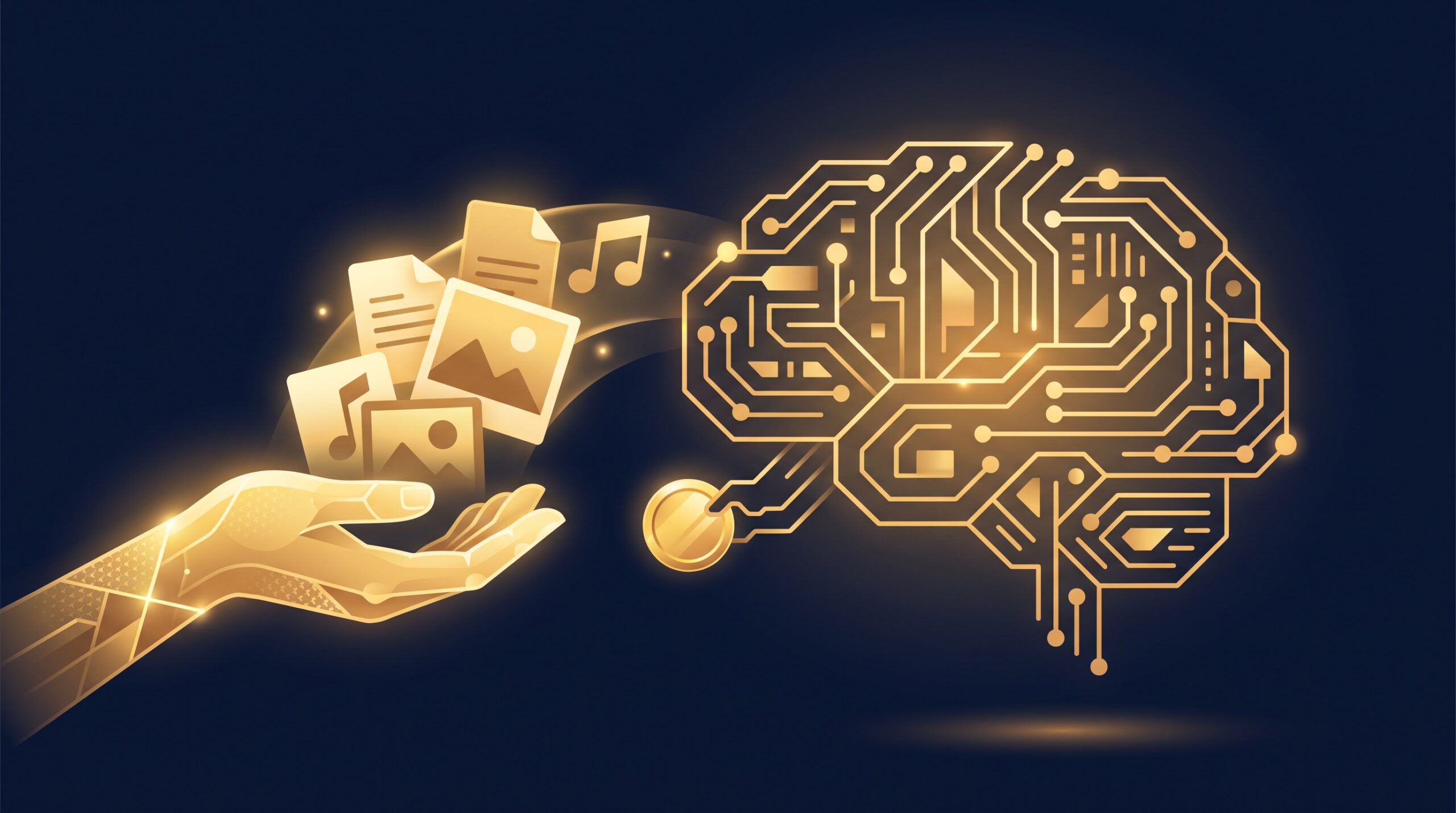
For a couple of years, the story about AI and creators was almost entirely a fight: companies scraped the open web, trained their models on billions of images, articles, and songs, and creators got nothing but a lawsuit to root for. That fight isn’t over. But quietly, alongside it, something else has grown up — an actual market. AI companies need staggering amounts of high-quality data, the free-scraping era is getting legally risky, and a growing number of them now do the once-unthinkable thing: they pay for it.
That opens a real question for you as a creator or small-business owner. If your writing, photos, music, or data are valuable enough for an AI to want them, can you get paid when they’re used? Increasingly, yes — but the deals are uneven, the fine print matters enormously, and the opportunities look very different for a media company than for a solo artist. Here’s how it actually works.
Why AI Companies Are Suddenly Willing to Pay
Three things changed at once. First, the easy data ran out — models had already ingested most of the public web, and what’s left is either lower quality or locked behind logins and paywalls. Second, the lawsuits piled up, from artists and authors to record labels and news organizations, making “just scrape it” a genuine legal and financial risk. Third, buyers realized that licensed, clean, rights-cleared data is worth more than a messy pile of scraped files — it’s safer to build on and often higher quality.
Track the cases yourself
Every current AI-copyright ruling — and the ones still being fought — lives in our AI Copyright Ruling Tracker. Filter by your creator type to see, in plain language, how each case affects your rights.
So the biggest AI firms started signing checks. OpenAI struck content partnerships with news and publishing companies including the Associated Press, Axel Springer, News Corp, Vox Media, The Atlantic, Financial Times, and Condé Nast. Reddit signed a widely reported licensing deal with Google worth a reported sixty million dollars a year to let its posts train AI. Stock platforms like Shutterstock and Adobe built compensation funds so the photographers and illustrators in their libraries share in AI revenue. The pattern is clear: content has a price again.
The Deals That Set the Template
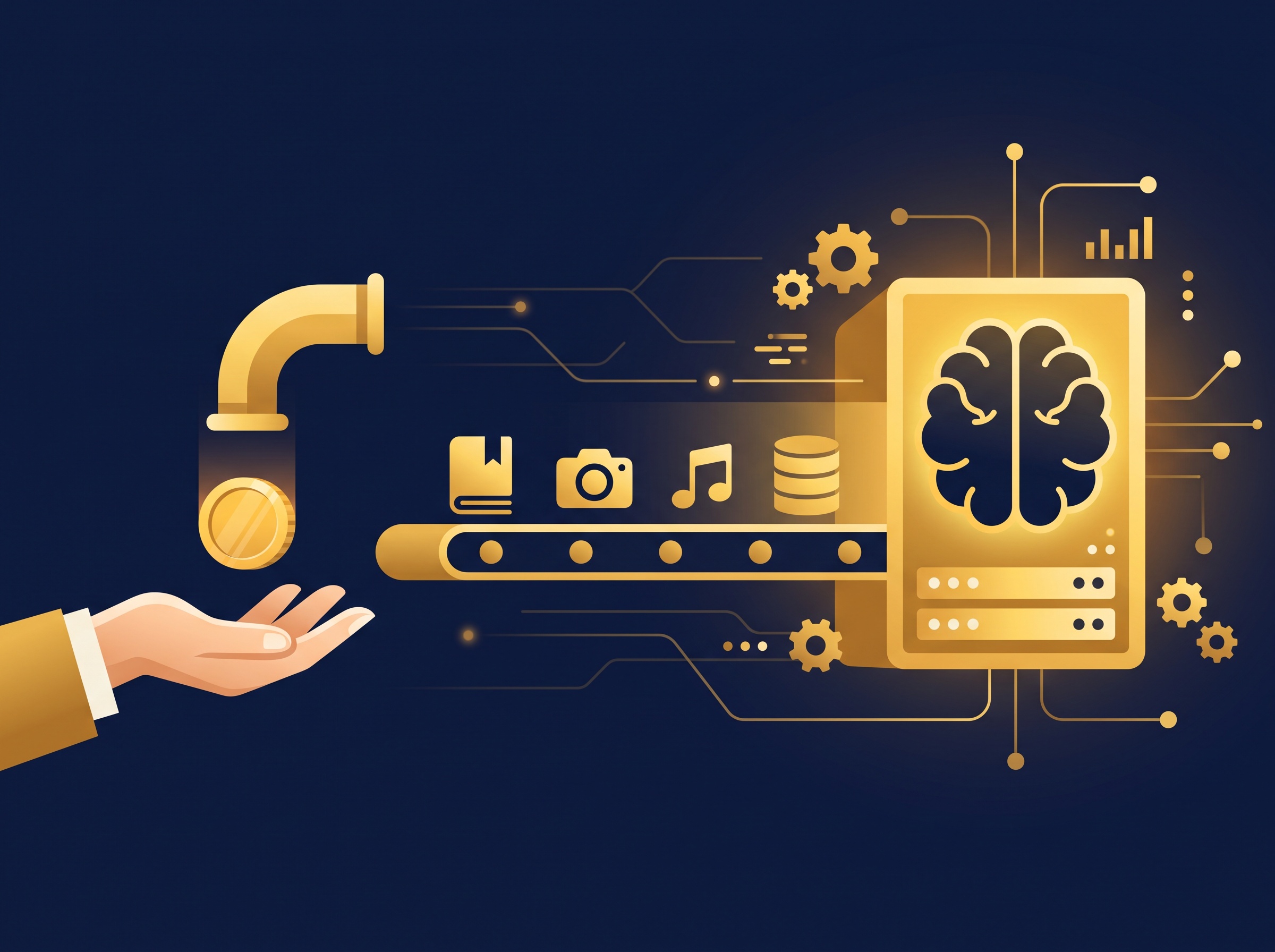
Most of the headline deals so far share a shape, and it’s useful to know it even if you’ll never sign one that big. A company with a large, rights-cleared library — a news archive, a photo collection, a forum full of user posts — grants an AI firm the right to use that content for training, usually for a set number of years, in exchange for money. Payment comes as a flat fee, an annual license, a revenue share, or some blend, and often includes access to the AI company’s tools on the side.
Two flavors matter. Training licenses let the AI learn from your content to build its model. Access or “real-time” licenses let the AI pull your content live to answer questions and cite you, which can send traffic and attribution back your way. They’re priced and negotiated differently, and a good deal often bundles both. The takeaway for a smaller player: the thing being sold isn’t just “content” — it’s specific, defined rights to use that content in specific ways, and every one of those rights is negotiable.
What This Means for You If You’re a Solo Creator
Here’s the honest part. Nobody from OpenAI is going to email an individual photographer or a niche newsletter writer to license their catalog directly — the transaction cost is too high for one person’s work. That doesn’t mean you’re shut out. It means your realistic paths look different:
- Through the platforms you already use. If your images are on Shutterstock, Adobe Stock, or a similar library that has an AI compensation program, you may already be earning a slice when your work contributes to AI training. Check whether your platform has an AI fund or contributor payout, and whether you’re opted in or out.
- Through licensing marketplaces built for this. A new category of companies exists specifically to connect creators and rights-holders with AI buyers — bundling many contributors together so the deal is worth an AI company’s time. If you have a real catalog of writing, images, music, or a useful dataset, these are worth investigating.
- Through collective and industry deals. Trade groups, stock agencies, and publisher coalitions are negotiating on behalf of their members. Your leverage as one person is small; as part of a pool of thousands, it’s real.
- By licensing your own site or data directly if it’s distinctive and substantial — a large archive, a specialized dataset, a body of expert content. This is more realistic for a small business with a genuine data asset than for an individual with a handful of posts.
The mindset shift is this: you probably won’t cut a bespoke AI deal solo, but you can make sure you’re positioned — in the right programs, opted in where it pays, and not accidentally giving your work away for free when a paid path exists.
The Fine Print That Decides Whether a Deal Is Good
Whether the offer comes from a marketplace, a platform, or a buyer directly, a licensing agreement lives or dies in its terms. Before you sign anything, look hard at these:
- Scope of use. Exactly what can they do — train models, generate outputs, redistribute, sublicense to others? “For AI purposes” is far too vague. Pin it down.
- Exclusive or non-exclusive. A non-exclusive license lets you keep licensing the same work elsewhere. Exclusivity should cost them significantly more, because it takes away every other deal you could make.
- Term and termination. Is this for two years or forever? Beware perpetual, irrevocable licenses — once your work is baked into a trained model, you generally can’t claw it back, so “perpetual” is close to permanent in practice. Price accordingly.
- Payment structure. Flat fee, per-use, or revenue share? A flat fee is simple and certain; a revenue share can be worth more but is harder to verify. Ask how usage is measured and reported.
- Rights you actually hold. You can only license what you own. If your work includes other people’s material, client-owned deliverables, or images with recognizable people, you may not have the right to license it for AI at all.
- Indemnification. Watch for clauses that make you promise the content is clean and put you on the hook if it isn’t. That’s normal, but understand what you’re guaranteeing.
A licensing deal is not a tip jar; it’s a contract. The number on the check matters less than what you’re permanently handing over to earn it.
Opt In, Opt Out, and Staying in Control
Even if you never chase a licensing deal, you have a decision to make: do you want your work used to train AI at all? Many platforms now offer opt-out settings, and some offer opt-in programs where opting in is what unlocks payment. There’s a real trade-off here. Opting out protects your work from training but earns you nothing; opting in to a paying program earns something but means your work is in the machine. Neither is automatically right — it depends on your goals, your medium, and how you feel about it. What matters is that you make the choice deliberately instead of having it made for you by a default checkbox.
Where This Is Heading
The direction of travel is toward a more normal market: AI companies increasingly expect to pay for premium, licensed data, and infrastructure to make that easy for smaller creators keeps improving. That’s genuinely good news after the free-for-all years. But it’s early, rates are all over the map, and the biggest checks still flow to the biggest catalogs. For now, the smart moves are boring and effective — know which of your platforms pay, opt in where the money is real, read every term before you sign, and never grant a forever license for a one-time price.
This article is general information, not legal advice. AI licensing terms are new, fast-changing, and often heavily one-sided in the buyer’s favor. Before signing any agreement that grants rights to your work — especially a perpetual or exclusive one — have a qualified IP or contracts attorney review it.
IPSurge helps creators and small businesses understand and protect their intellectual property — the ideas, names, and work that make them unique.
Sources & further reading:
- OpenAI — Content partnership announcements (news & publisher deals)
- Reuters — Reddit signs AI content licensing deal with Google
- Shutterstock — Contributor earnings and the generative AI Contributor Fund
- Adobe — Firefly and Adobe Stock contributor compensation
- U.S. Copyright Office — Copyright and Artificial Intelligence study